Carry1st
Boosting user retention and conversion with transparency and excellent recovery
Boosting user retention and conversion with transparency and excellent recovery
Boosting user retention and conversion with transparency and excellent recovery
Introduction
About Carry1st
About Carry1st
Carry1st Shop is a digital marketplace where users across Africa buy game credits, data bundles, and digital services instantly and securely.
Role
Product Design Lead
Year
2025
Deliverables
User research, Component Library, HiFi Designs
Team
Product Designers, Product Managers, Engineers
Platform
Web Responsive, Mobile App
Introduction
About Carry1st
Carry1st Shop is a digital marketplace where users across Africa buy game credits, data bundles, and digital services instantly and securely.
Role
Product Design Lead
Year
2025
Deliverables
User research, Component Library, HiFi Designs
Team
Product Designers, Product Managers, Engineers
Platform
Web Responsive, Mobile App
The Problem
Over 10,000 failed paid orders caused refund overload, 45% churn, and damaging ‘scam’ reviews from users.
In the first 4 months of 2025, data showed 10,364 out of 1.26 million order fulfillments failed after customers had made their payments. After a failed fulfillment, no action is taken by the platform until the users reach out to our customer support team to make a complaint.
Only 5,993 (57.8%) of customers come forward to make complaint, resulting in:
01
Over 50 daily manual refund requests which overwhelms the support team.
01
Over 50 daily manual refund requests which overwhelms the support team.
02
45% of customers who experience failed fulfillments churning.
02
45% of customers who experience failed fulfillments churning.
03
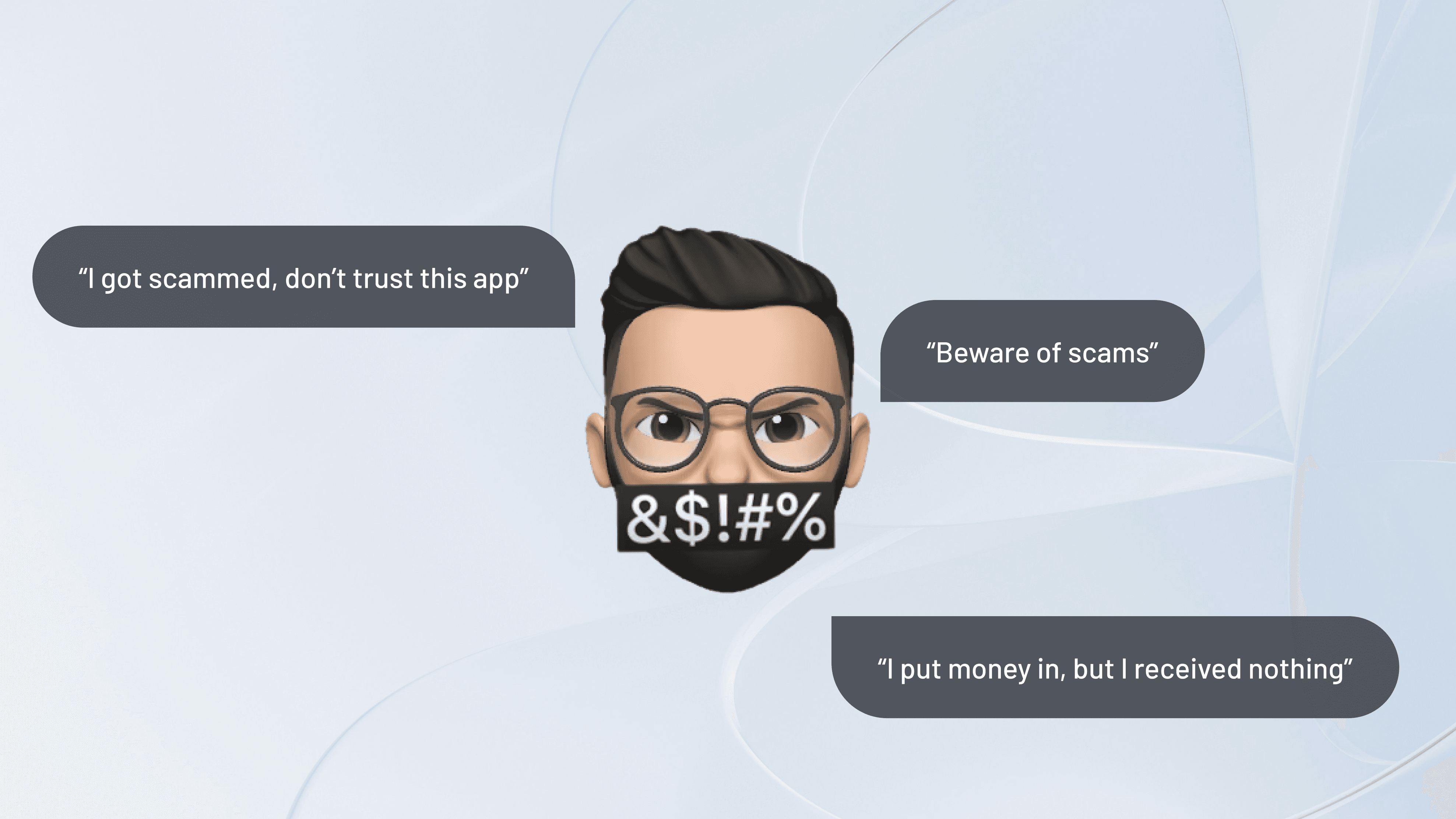
User trust declining and platform conversion taking a hit after user reviews such as "Beware of Scams", "I got scammed, don't trust this app".
03
User trust declining and platform conversion taking a hit after user reviews such as "Beware of Scams", "I got scammed, don't trust this app".
The Problem
Over 10,000 failed paid orders caused refund overload, 45% churn, and damaging ‘scam’ reviews from users.
In the first 4 months of 2025, data showed 10,364 out of 1.26 million order fulfillments failed after customers had made their payments. After a failed fulfillment, no action is taken by the platform until the users reach out to our customer support team to make a complaint.
Only 5,993 (57.8%) of customers come forward to make complaint, resulting in:
01
Over 50 daily manual refund requests which overwhelms the support team.
02
45% of customers who experience failed fulfillments churning.
03
User trust declining and platform conversion taking a hit after user reviews such as "Beware of Scams", "I got scammed, don't trust this app".
The Roadblocks
User research and benchmarking studies quickly revealed the key issues:
01
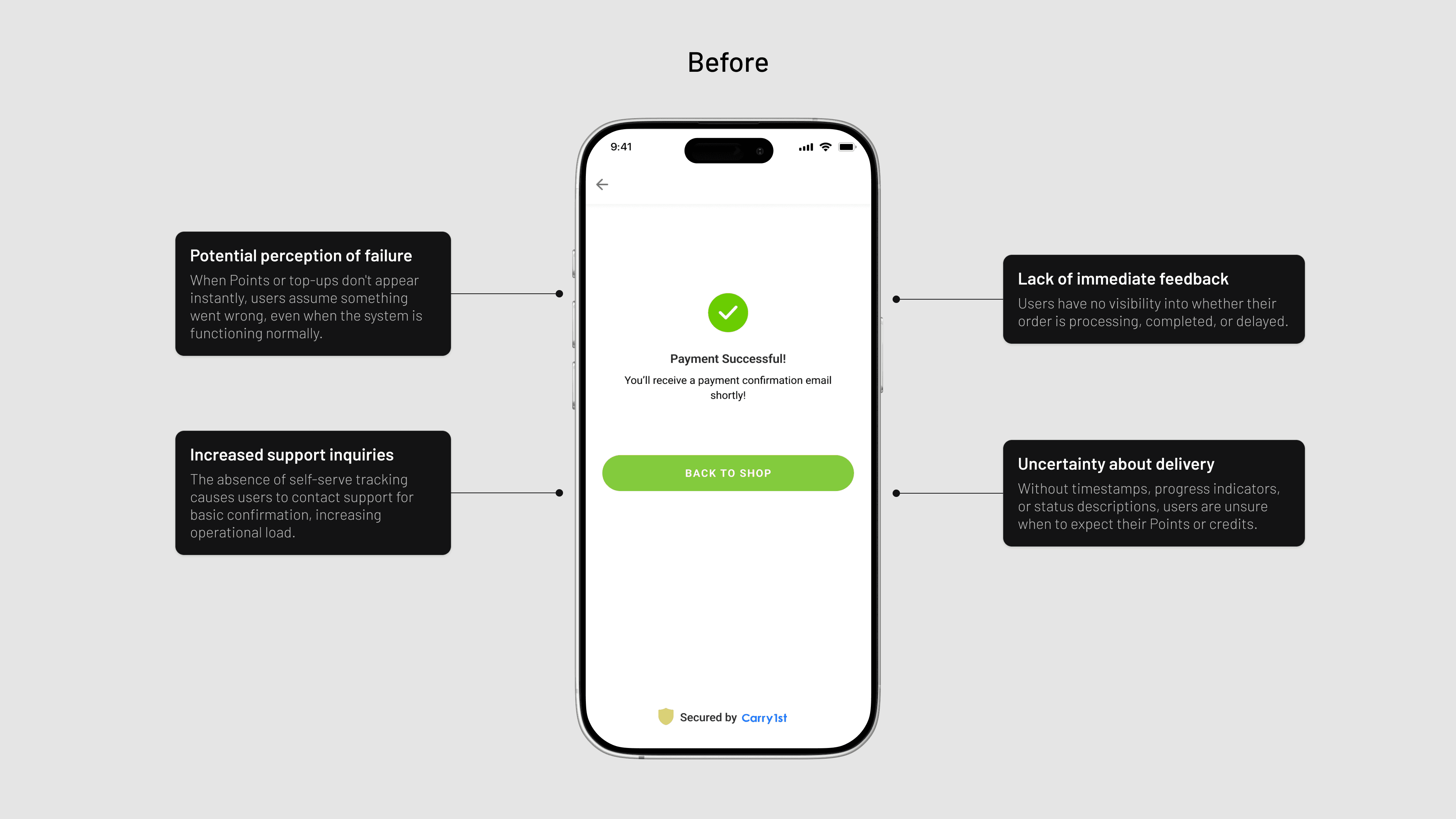
Lack of visibility into the order fulfillment process
01
Lack of visibility into the order fulfillment process
02
No proactive recovery mechanisms when fulfillment fails
02
No proactive recovery mechanisms when fulfillment fails
03
Resolution is customer initiated and not platform initiated
03
Resolution is customer initiated and not platform initiated
All of these eroded user trust and increased churn.
The Roadblocks
User research and benchmarking studies quickly revealed the key issues:
01
Lack of visibility into the order fulfillment process
02
No proactive recovery mechanisms when fulfillment fails
03
Resolution is customer initiated and not platform initiated
All of these eroded user trust and increased churn.
Asking the right questions
How might we
Give users clear, real-time visibility into the fulfillment process so they feel informed, reassured, and in control, even when issues occur?
Proactively trigger corrective actions when we detect failed transactions before users even notice a problem?
Reduce manual support workload by creating intuitive recovery flows that resolve fulfillment issues without requiring users to contact support?
Asking the right questions
How might we
Give users clear, real-time visibility into the fulfillment process so they feel informed, reassured, and in control, even when issues occur?
Proactively trigger corrective actions when we detect failed transactions before users even notice a problem?
Reduce manual support workload by creating intuitive recovery flows that resolve fulfillment issues without requiring users to contact support?
Listening and learning
Gathering insights
I conducted a user research with participants who had experienced issues with the fulfillment of their order within the last 4 months to get some insights into their experience and pain points
All participants made the same remarks about the anxiety they feel when they don’t know the status of their purchase, and the anger that follows a failed fulfillment.
They requested more visibility when they make purchases, and quick and easy recovery when issues occur.
Listening and learning
Gathering insights
I conducted a user research with participants who had experienced issues with the fulfillment of their order within the last 4 months to get some insights into their experience and pain points
All participants made the same remarks about the anxiety they feel when they don’t know the status of their purchase, and the anger that follows a failed fulfillment.
They requested more visibility when they make purchases, and quick and easy recovery when issues occur.

What I did next
I then conducted benchmarking studies, and facilitated stakeholder meetings to make a clear business case for the problem and our design strategy.
I collaborated with the PM and engineering lead on the order of priority for the development of the design outputs, so we could address the pain points expediently.
What I did next
I then conducted benchmarking studies, and facilitated stakeholder meetings to make a clear business case for the problem and our design strategy.
I collaborated with the PM and engineering lead on the order of priority for the development of the design outputs, so we could address the pain points expediently.
Articulating design decisions
Mapping the experience
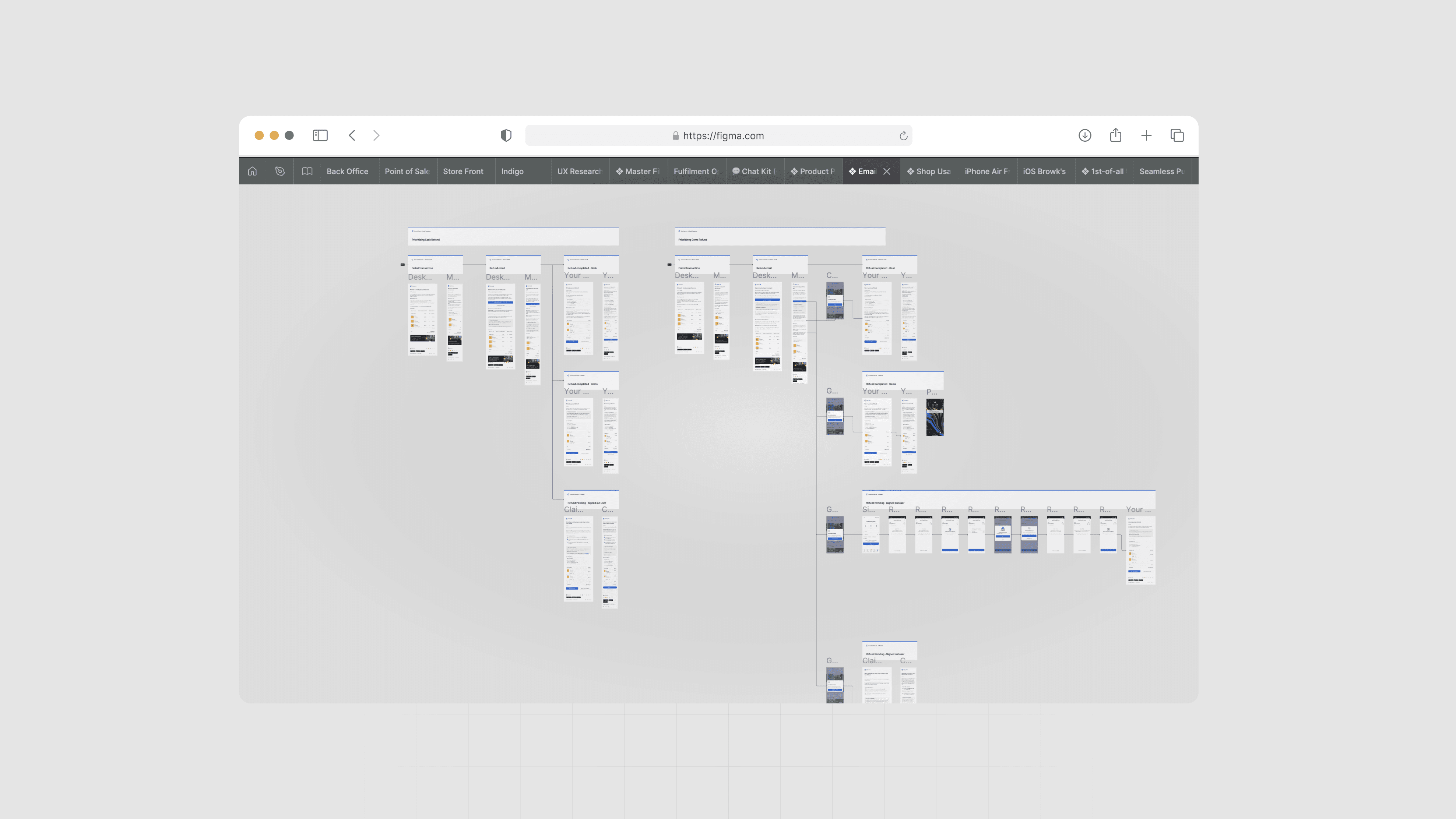
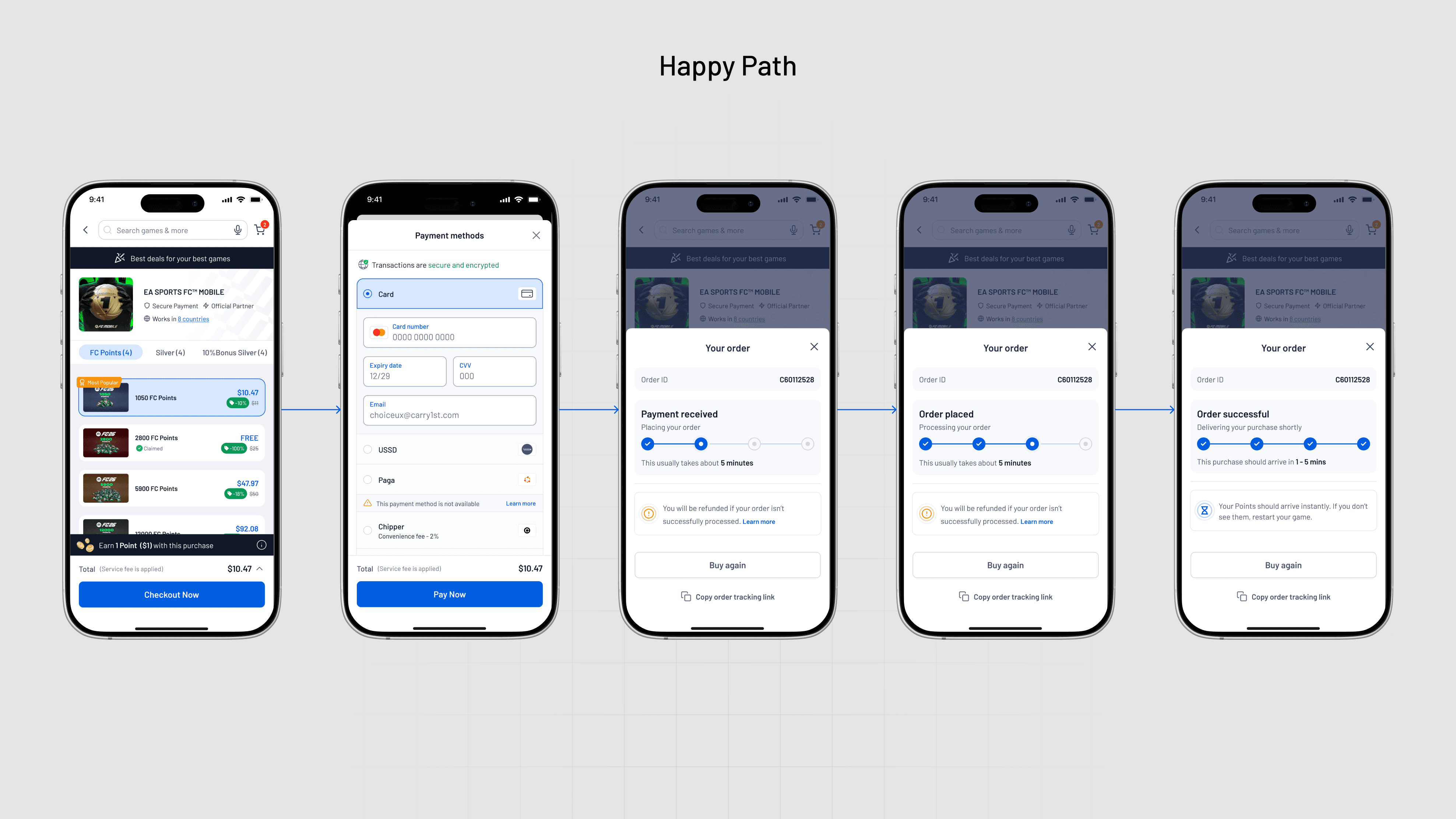
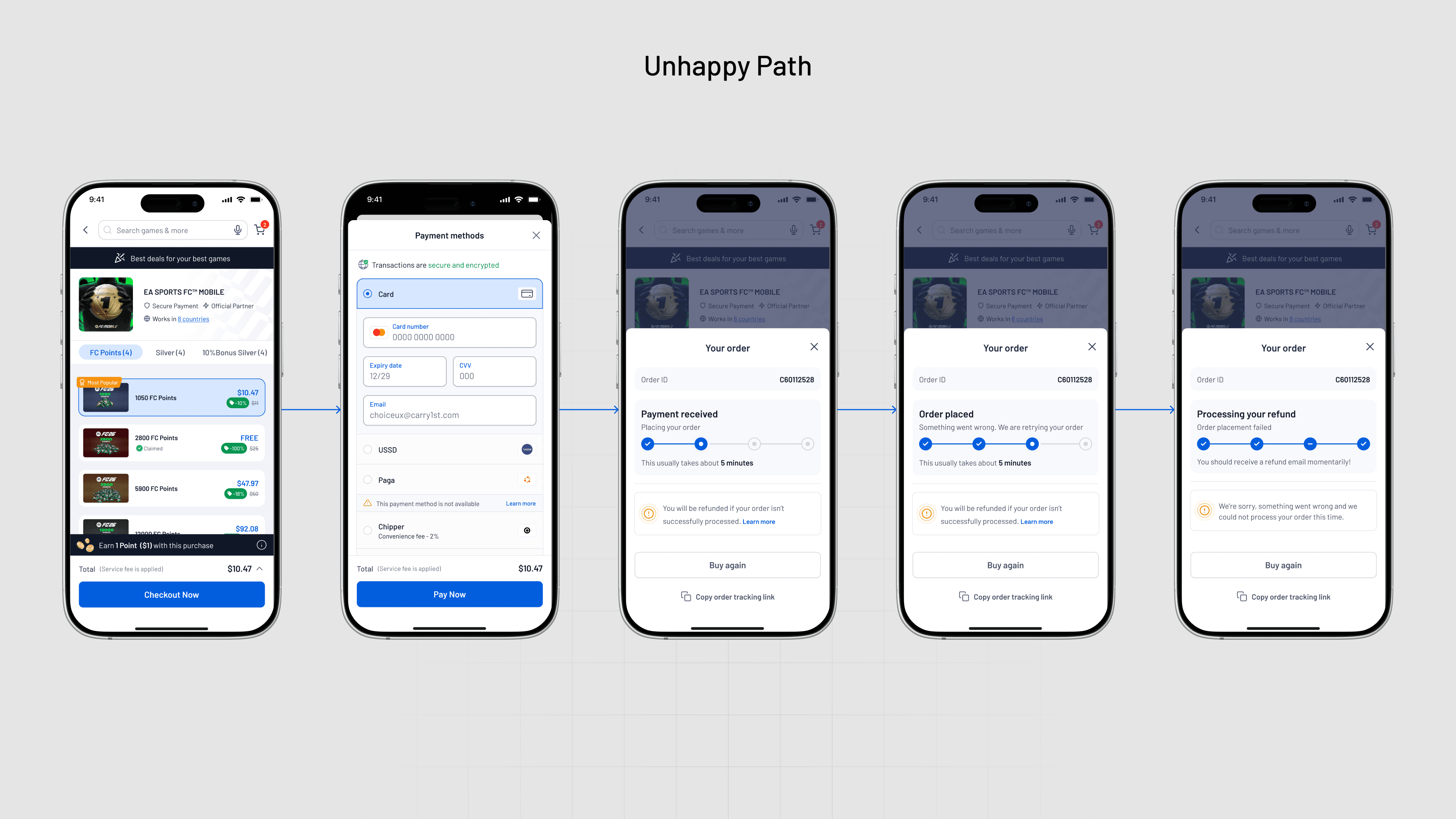
I mapped the user flows anticipating both the happy path and unhappy path.
Articulating design decisions
Mapping the experience
I mapped the user flows anticipating both the happy path and unhappy path.
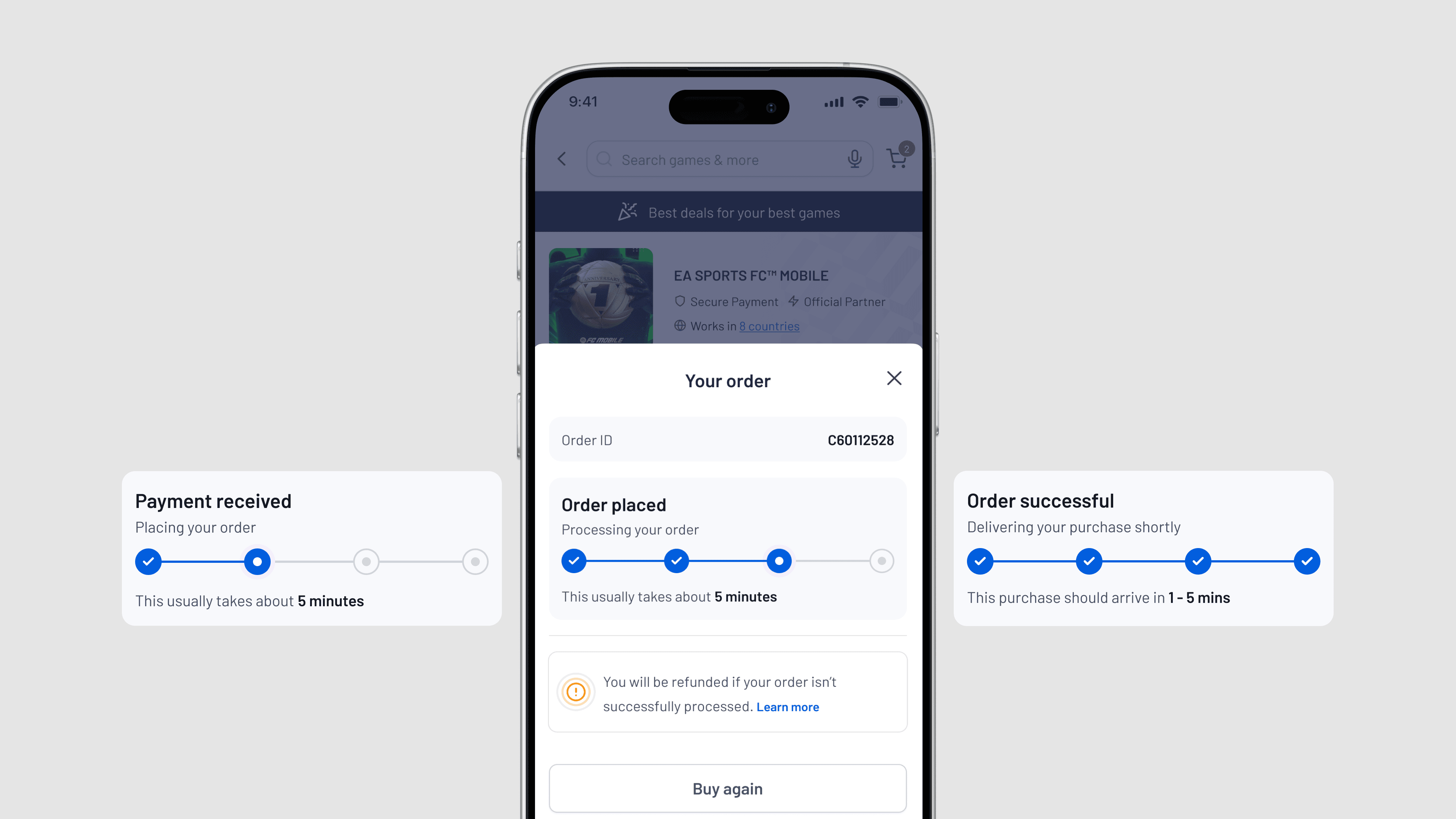
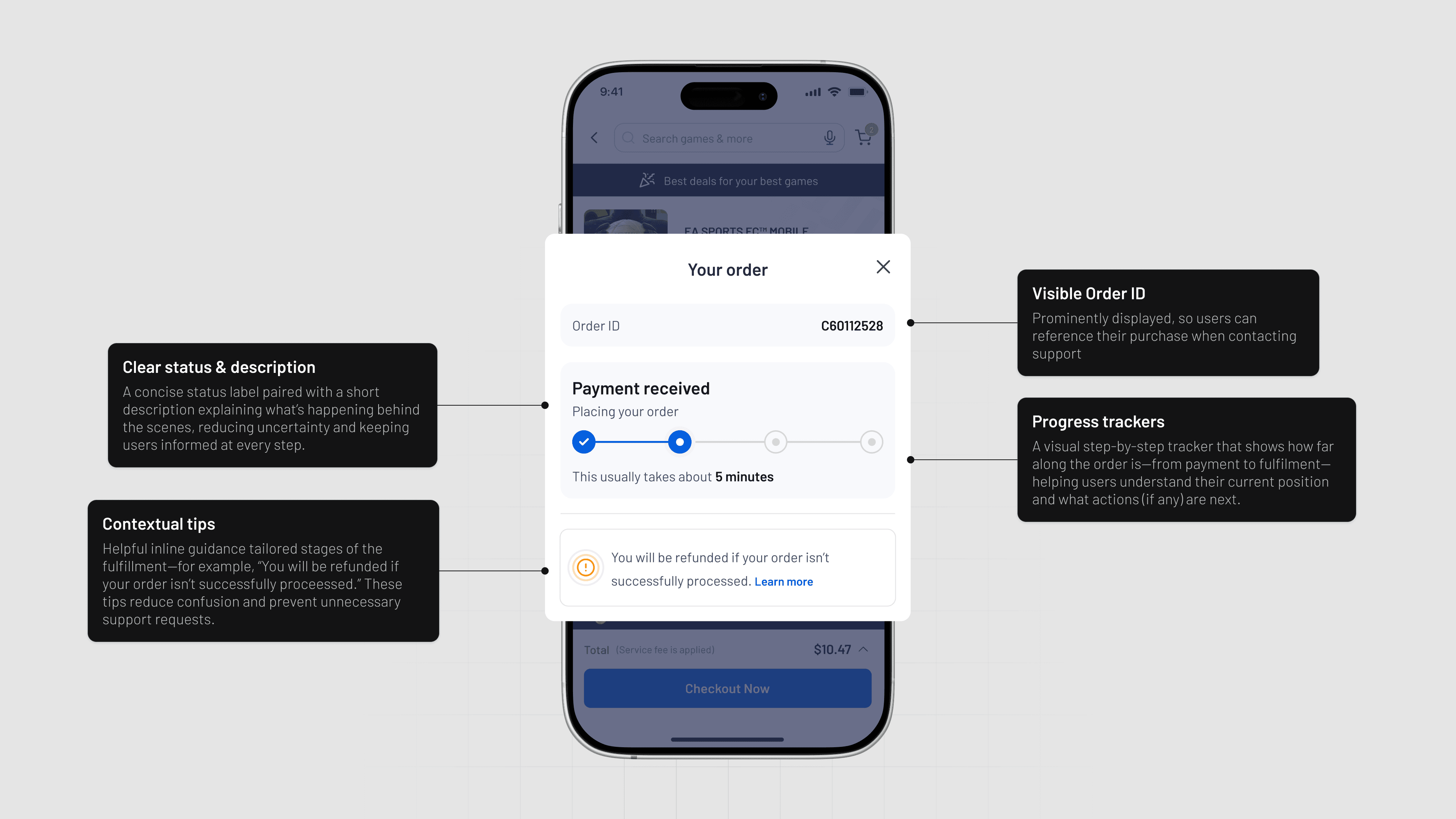
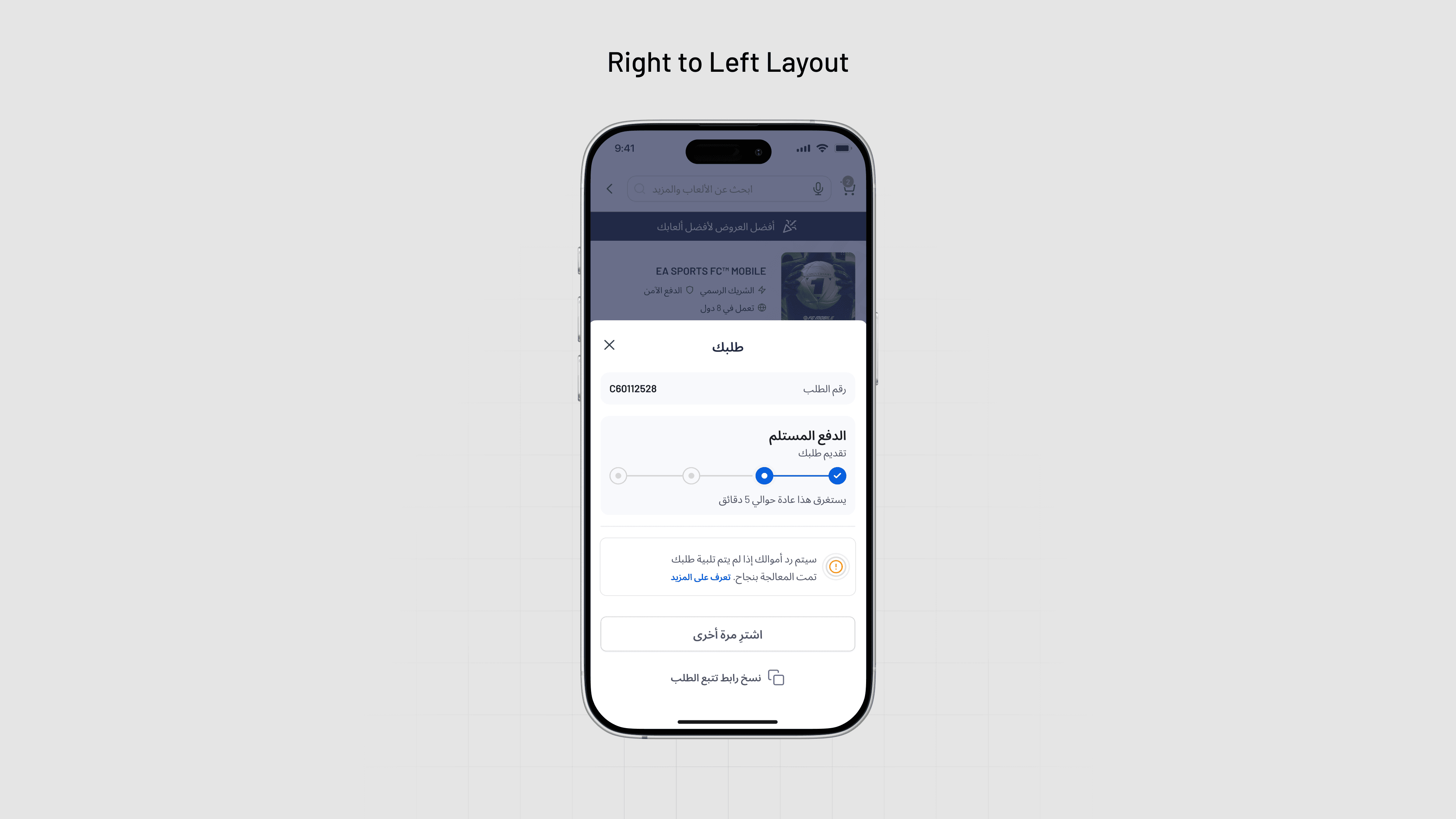
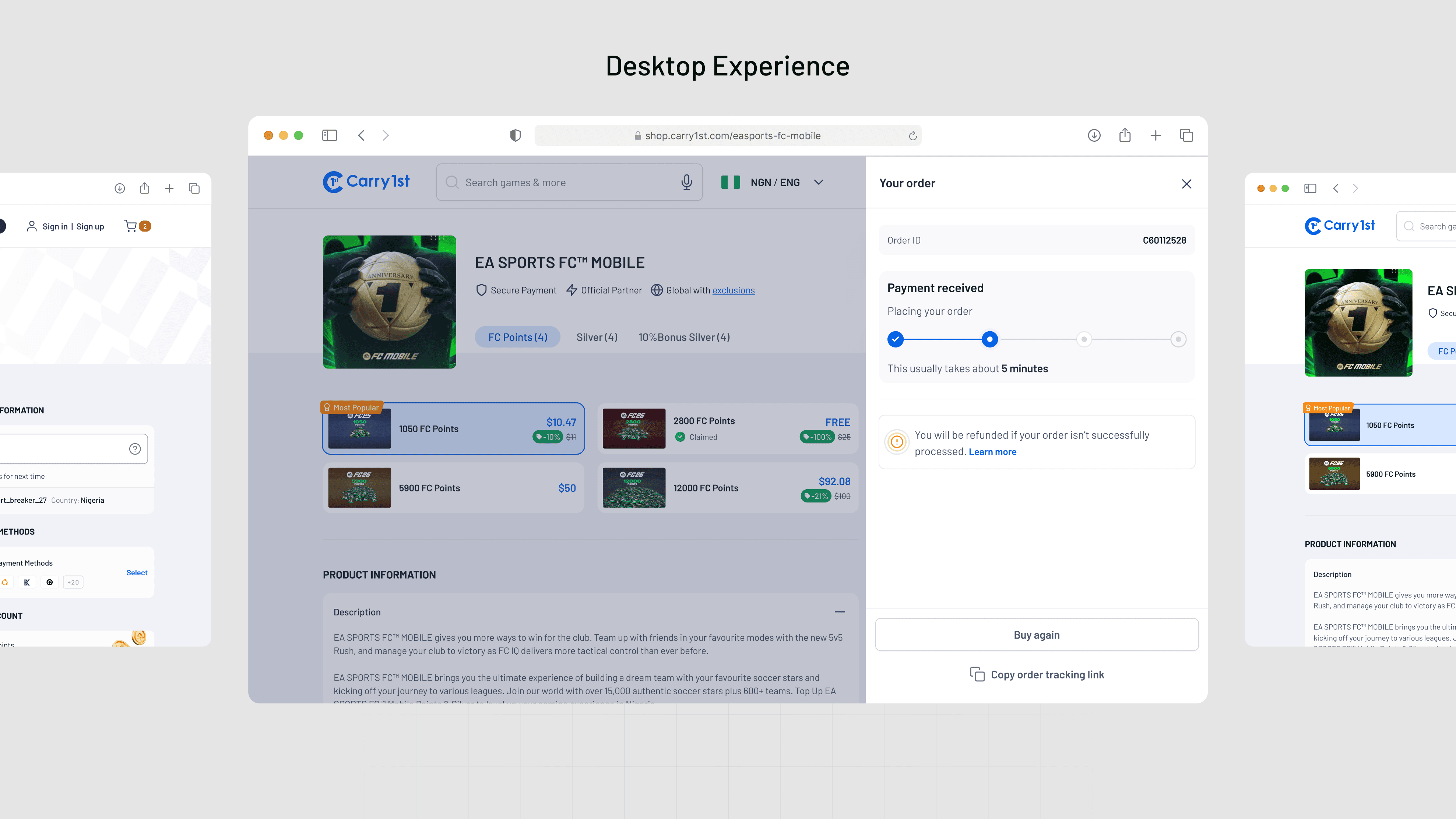
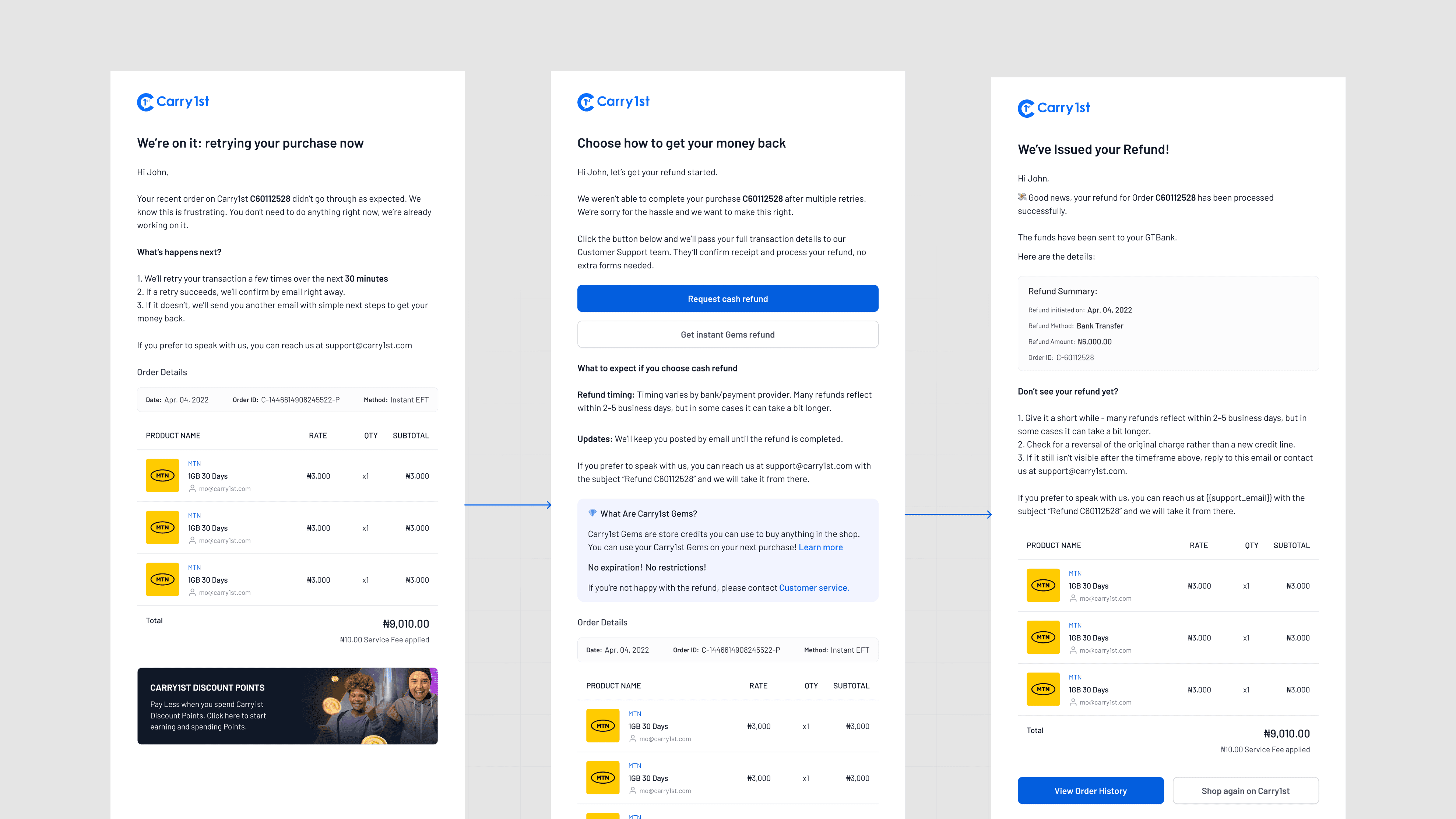
Order fulfillment tracking
Designing for real time visibility
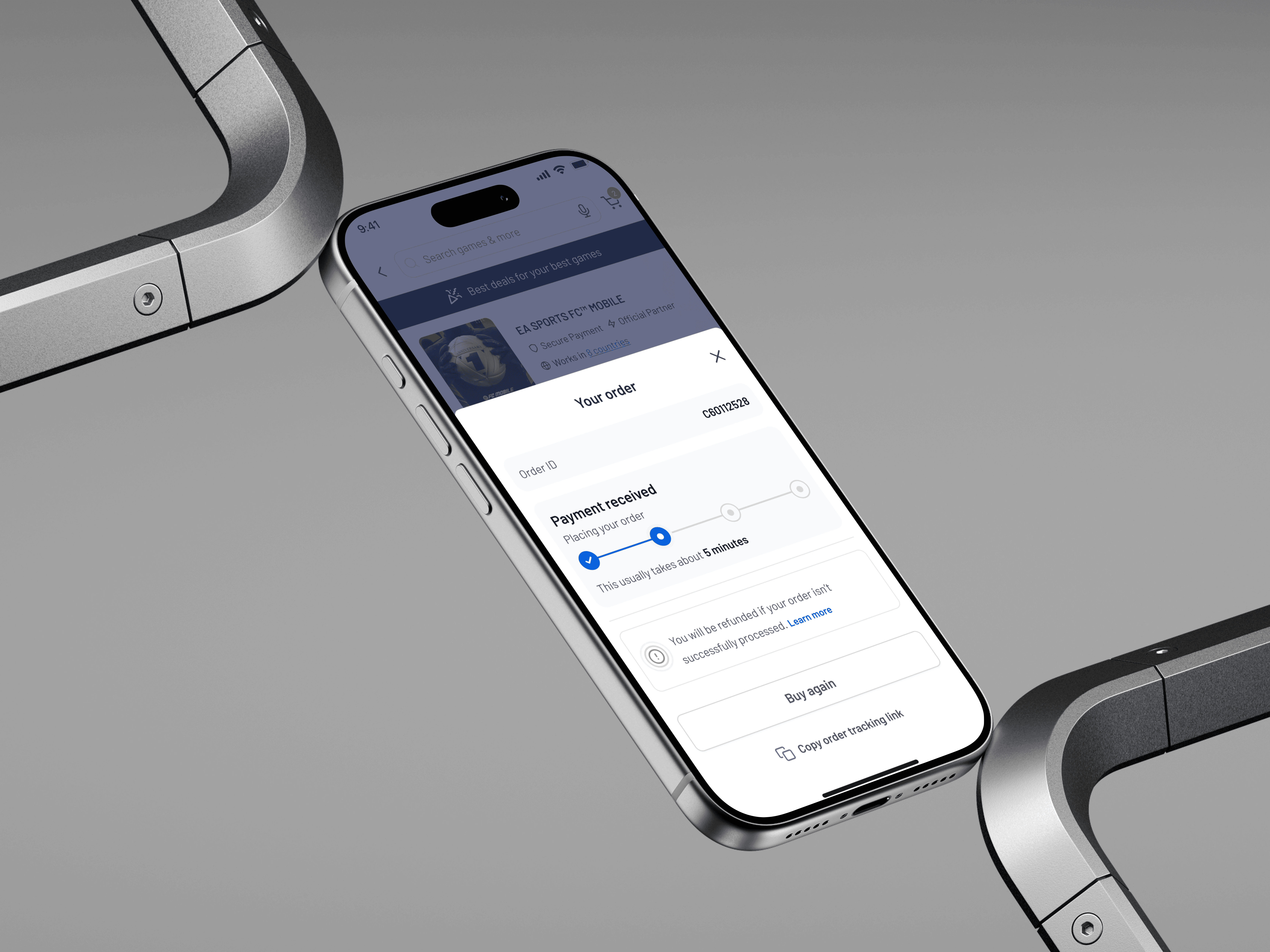
Giving users clear, real-time visibility into the fulfillment process so they feel informed, reassured, and in control, even when issues.
Order fulfillment tracking
Designing for real time visibility
Giving users clear, real-time visibility into the fulfillment process so they feel informed, reassured, and in control, even when issues.
Proactively resolving issues
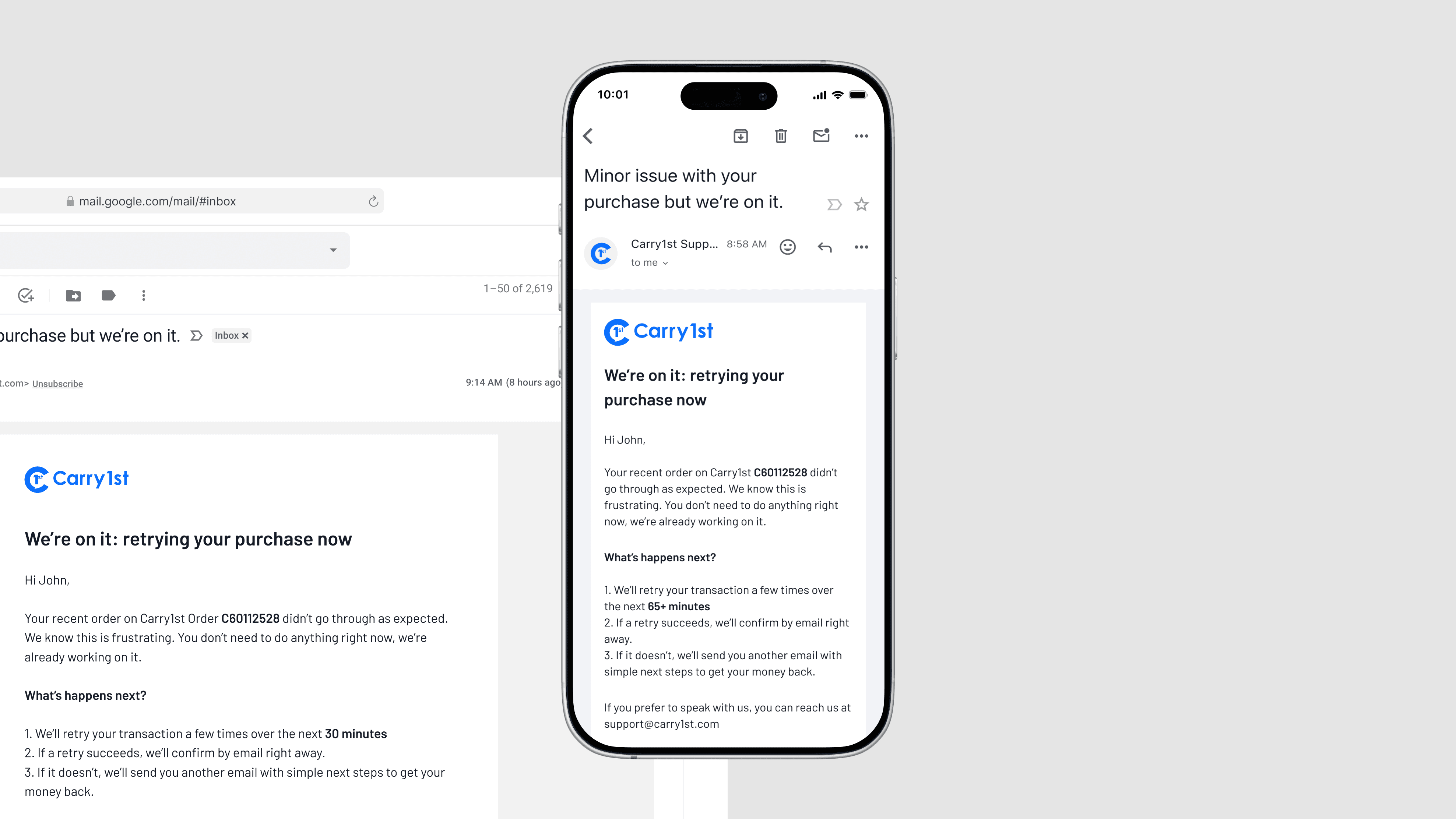
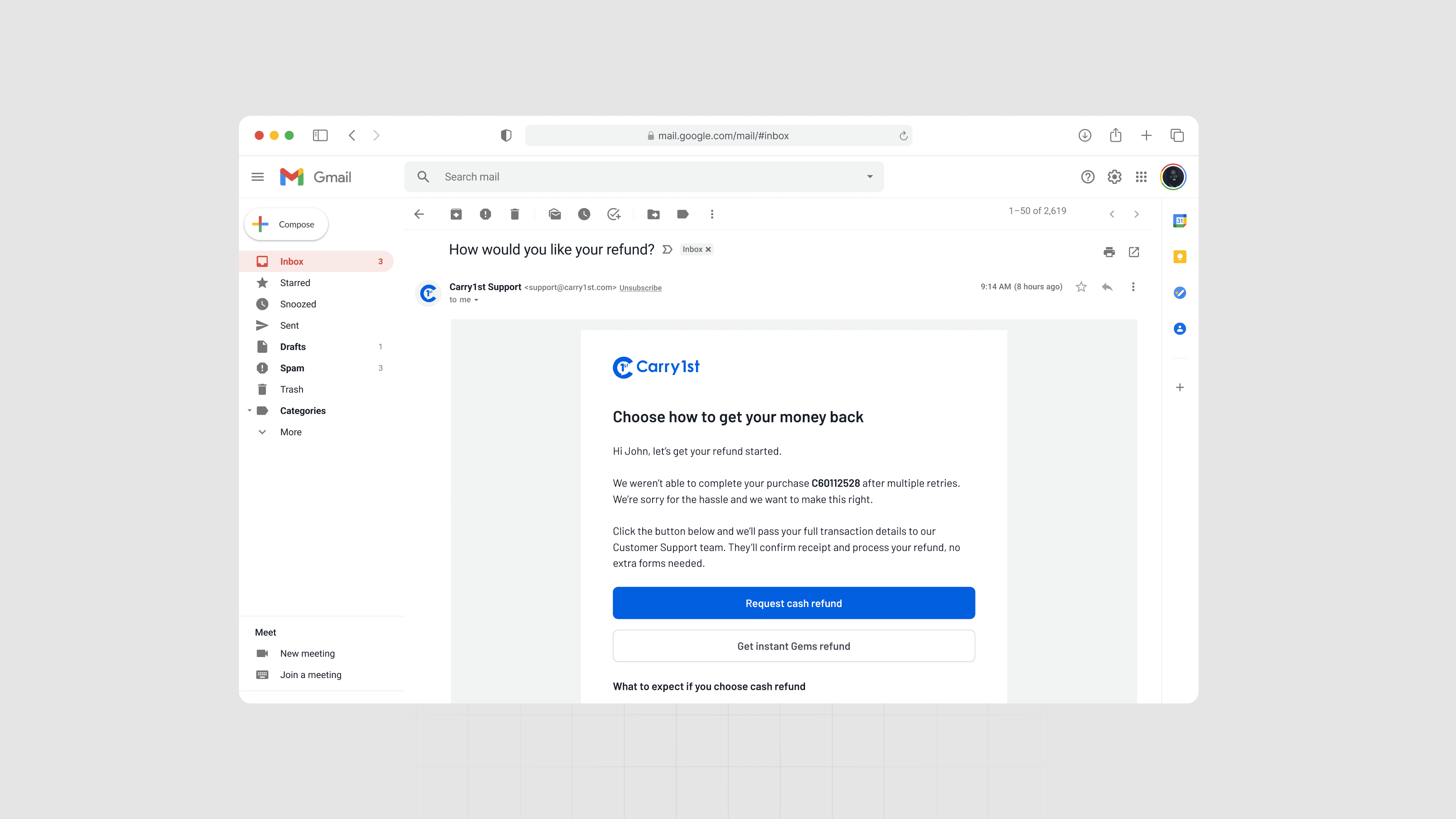
Designing for Proactive corrective actions when fulfillment fails
Proactively trigger corrective actions when we detect failed transactions before users even notice a problem.
Proactively resolving issues
Designing for Proactive corrective actions when fulfillment fails
Proactively trigger corrective actions when we detect failed transactions before users even notice a problem.
Estimated impact on key metrics
From the outset, our UX strategy was to ensure we addressed the users' needs and positively impact the key business metrics.
Estimated impact on key metrics
From the outset, our UX strategy was to ensure we addressed the users' needs and positively impact the key business metrics.
+0%
+0%
Decline in support tickets volume
+0%
+0%
Decline in month 1 Churn rate
+0%
+0%
Uplift in month 1 retention rate
+0%
+0%
Decline in support tickets volume
+0%
+0%
Decline in month 1 Churn rate
+0%
+0%
Uplift in month 1 retention rate
Collaboration & validation
The project required the collaboration of a cross-functional team, we gathered feedback as we tested iterations with users and conducted periodic grooming sessions with engineers to ensure clarity and timely release.
Collaboration & validation
The project required the collaboration of a cross-functional team, we gathered feedback as we tested iterations with users and conducted periodic grooming sessions with engineers to ensure clarity and timely release.
Helpful resources
Books
Design for How People Think

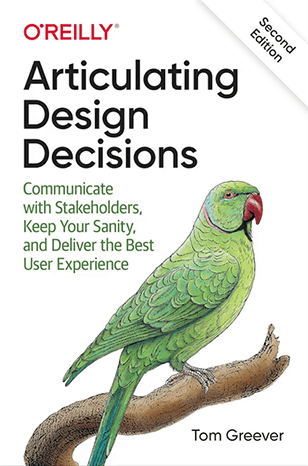
Articulating Design Decisions
UX Strategy

Design for How People Think
Articulating Design Decisions
UX Strategy
Articles
Psychological principles
01
Anchoring Bias - Users rely heavily on the first piece of information they see
01
Anchoring Bias - Users rely heavily on the first piece of information they see
02
Framing - The way information is presented affects how users make decisions
02
Framing - The way information is presented affects how users make decisions
Helpful resources
Books
Design for How People Think
Articulating Design Decisions
UX Strategy
Articles
Psychological principles
01
Anchoring Bias - Users rely heavily on the first piece of information they see
02
Framing - The way information is presented affects how users make decisions