Carry1st ● 2025
Streamlining payments that improved conversion and retention
Streamlining payments that improved conversion and retention
Streamlining payments that improved conversion and retention
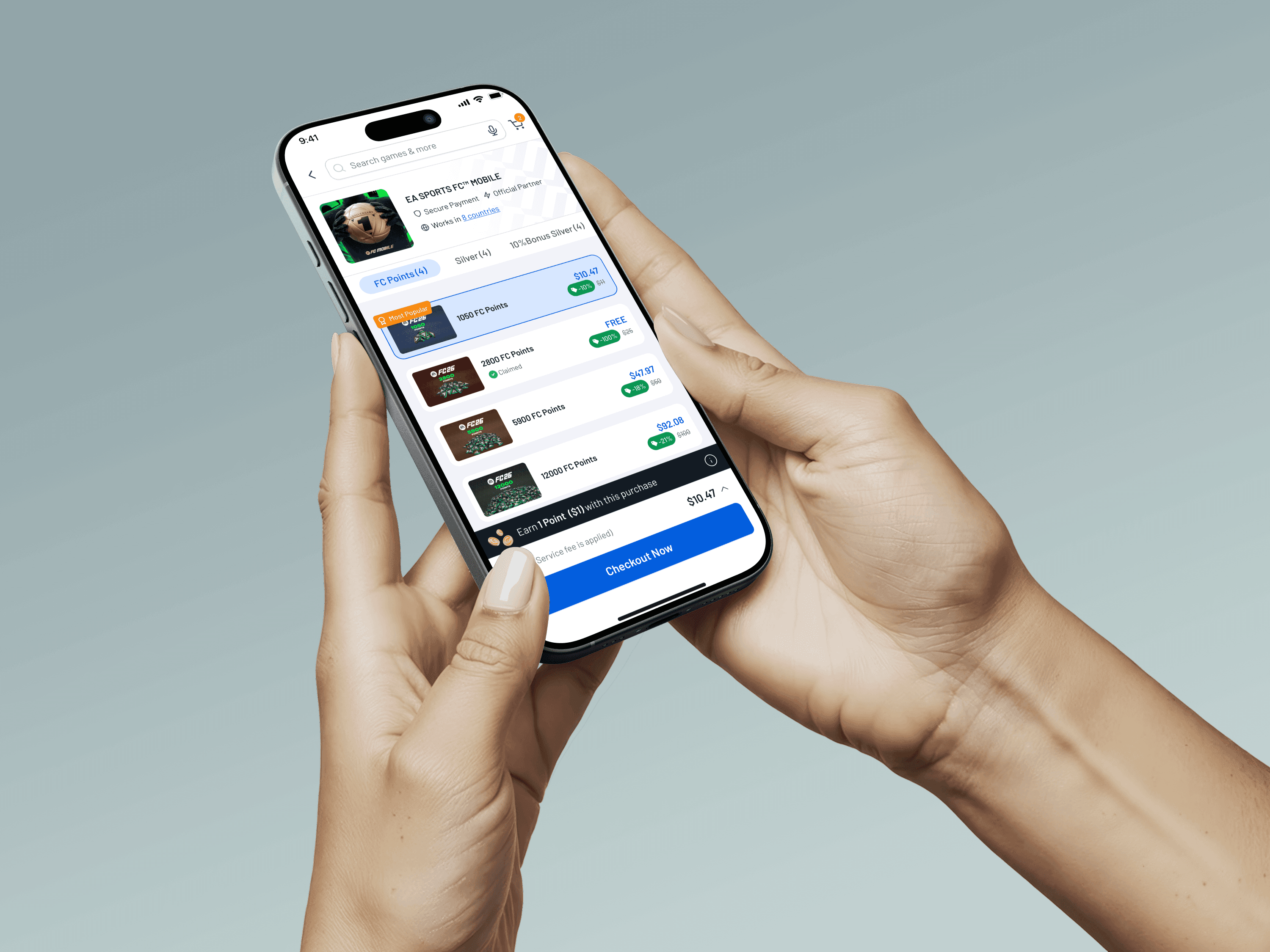
The Carry1st Shop is a digital marketplace where users across Africa buy game credits, data bundles, and digital services instantly and securely.
Role
Product Design Lead
Product Designer
Deliverables
User Research
Component Library
High Fidelity Designs
Team
2x Product Designers
1x Product Manager
4x Software Engineers
Platform
Web Responsive
Mobile Application
The Problem
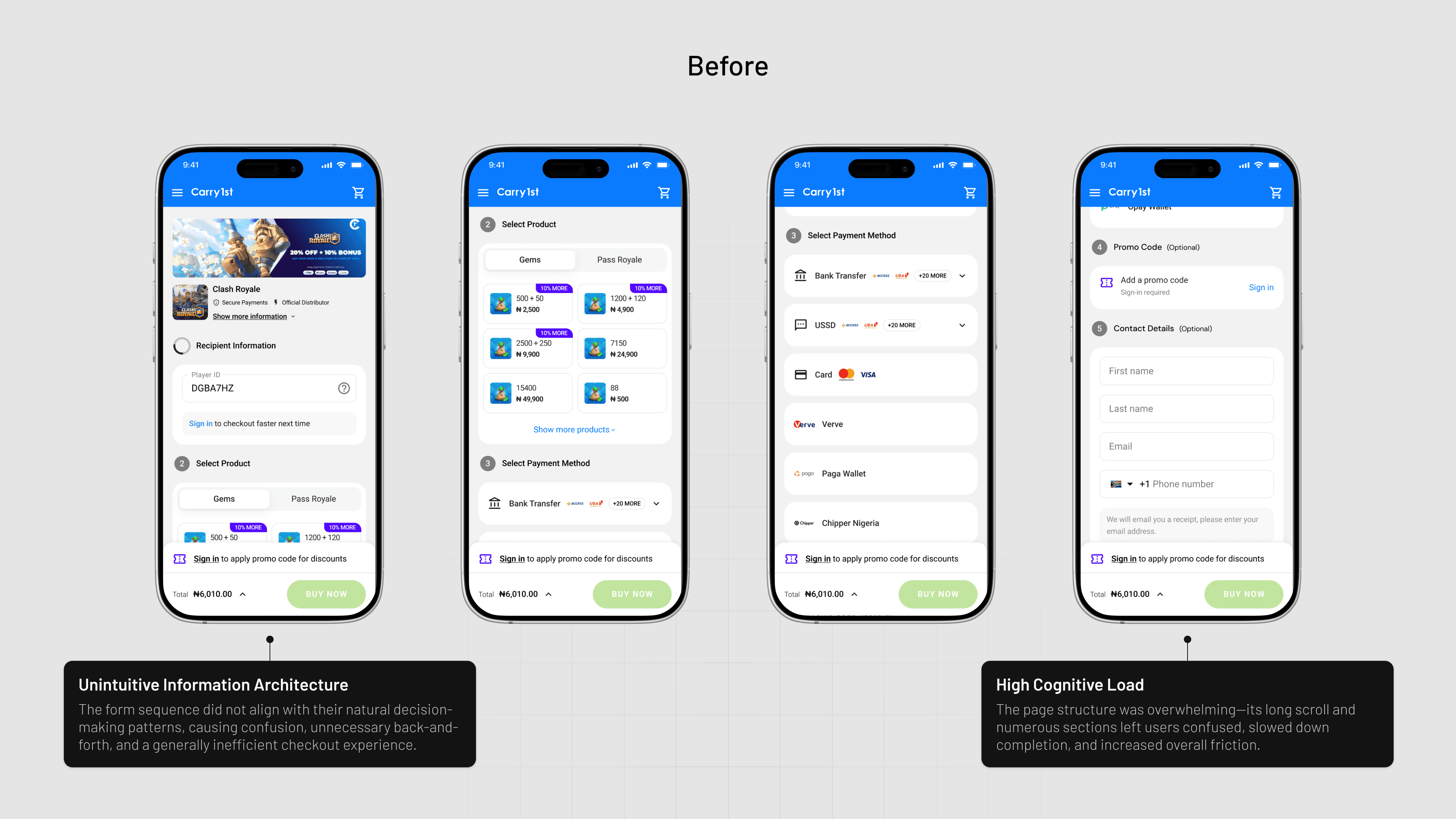
Nearly half of new and returning users drop off at the payment step
Over the last 12 months, nearly 46% of new users and 29% of returning users dropped off at the payment step—after selecting a payment method and entering their details—leading to significant conversion losses and an extended time to second purchase.
Other clear indicators of friction emerged, reflected in:
01
Average days to second purchase - 27 days
02
Drop off rate new users - 46%
03
Drop off rate returning users - 29%
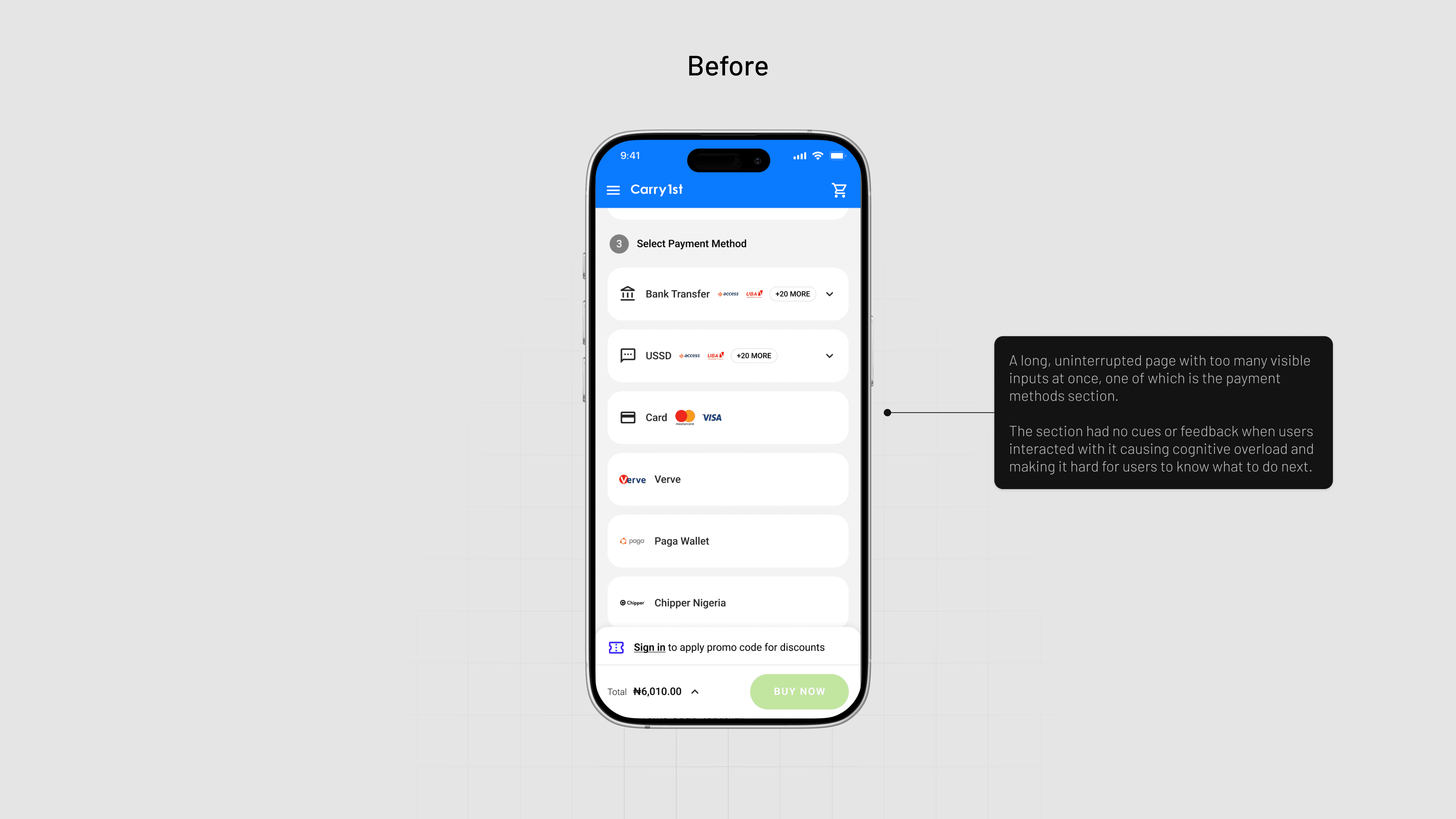
Product before redesign
Opportunity I
Simplify the product and payment experience to reduce cognitive load
Opportunity II
Strengthen trust and reassurance throughout the checkout journey
The Problem
Nearly half of new and returning users drop off at the payment step
Over the last 12 months, nearly 46% of new users and 29% of returning users dropped off at the payment step—after selecting a payment method and entering their details—leading to significant conversion losses and an extended time to second purchase.
Other clear indicators of friction emerged, reflected in:
01
Average days to second purchase - 27 days
02
Drop off rate new users - 46%
03
Drop off rate returning users - 29%
Product before redesign
Opportunity I
Simplify the product and payment experience to reduce cognitive load
Opportunity II
Strengthen trust and reassurance throughout the checkout journey
Design goals
How might we
Simplify the product and payment experience so users can complete purchases effortlessly, with fewer steps and less mental strain?
Build stronger trust signals and clearer reassurances at the payment step to help new and returning users feel safe, informed, and confident enough to complete their purchase?
Detect, prevent, and clearly communicate errors during checkout so users can recover instantly instead of abandoning their purchase?
Design goals
How might we
Simplify the product and payment experience so users can complete purchases effortlessly, with fewer steps and less mental strain?
Build stronger trust signals and clearer reassurances at the payment step to help new and returning users feel safe, informed, and confident enough to complete their purchase?
Detect, prevent, and clearly communicate errors during checkout so users can recover instantly instead of abandoning their purchase?
Design decision I
Simplifying the product and payment experience
I conducted usability research with 18 participants from Nigeria, Egypt, Kenya, and Morocco who had made zero or fewer than five purchases on the Carry1st Shop within the previous four months to uncover key pain points.
My first objective was to simplify the product and payment experience so users can complete purchases effortlessly, with fewer steps and less mental strain
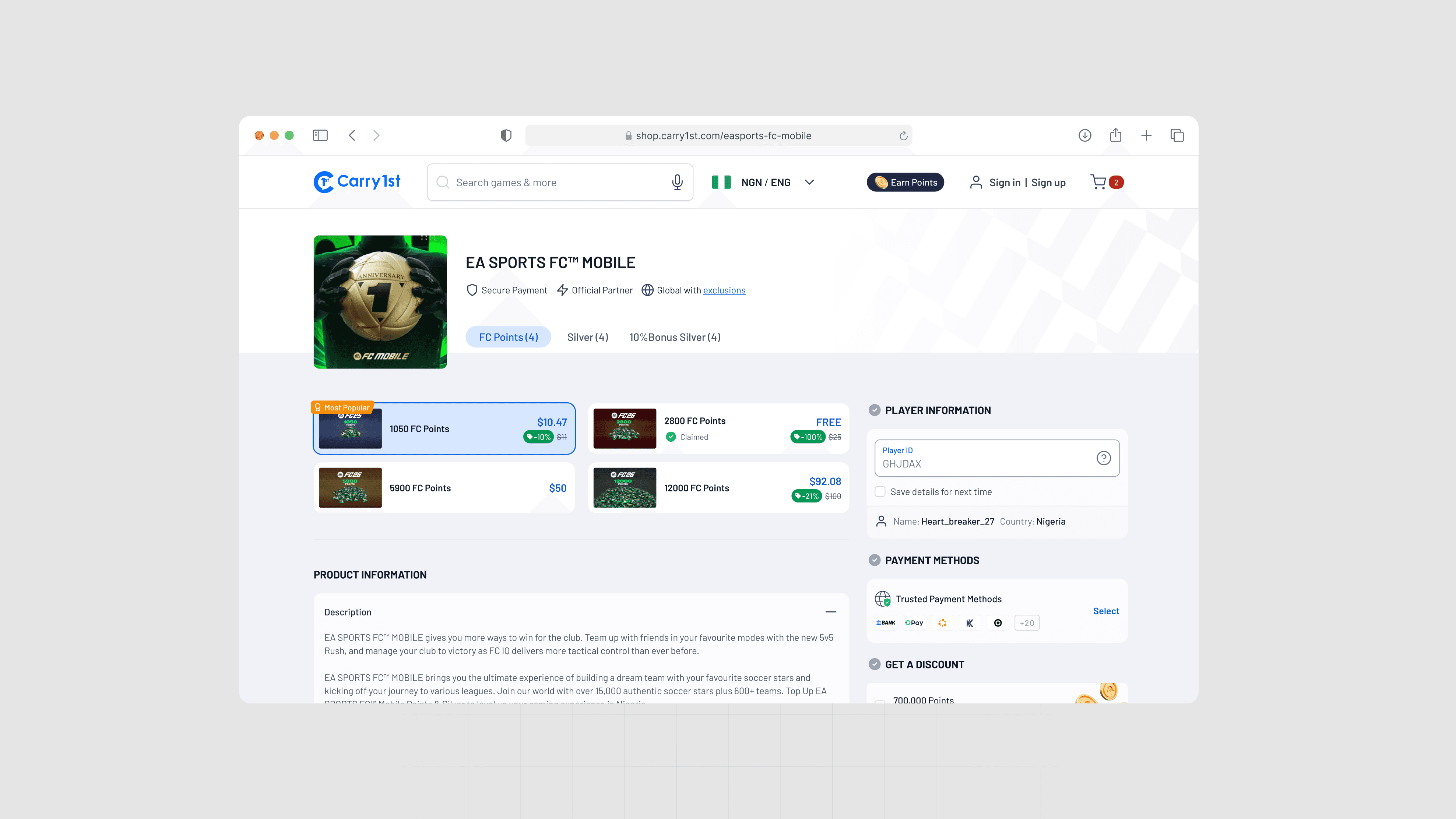
Redefined structure and information architecture
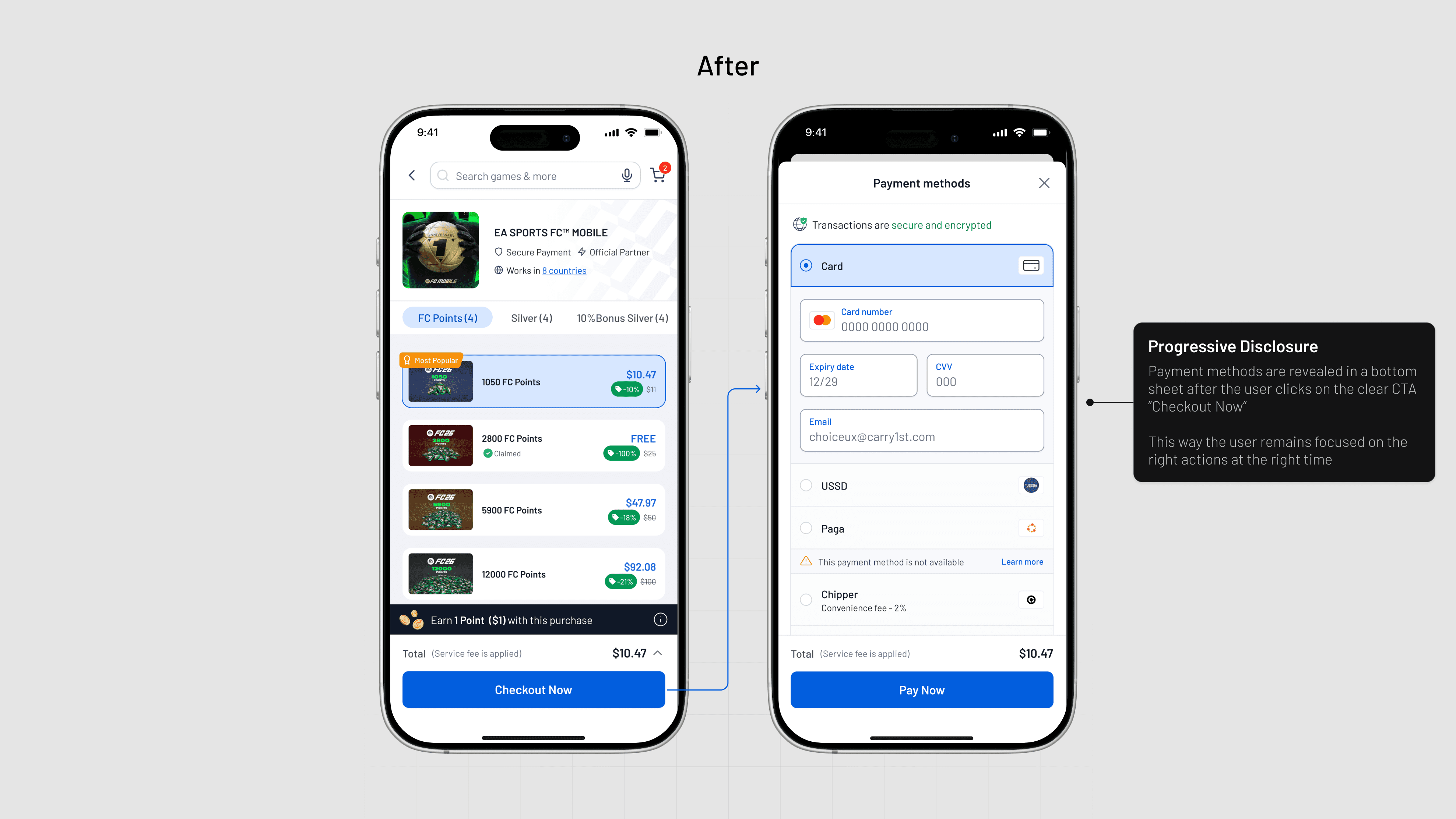
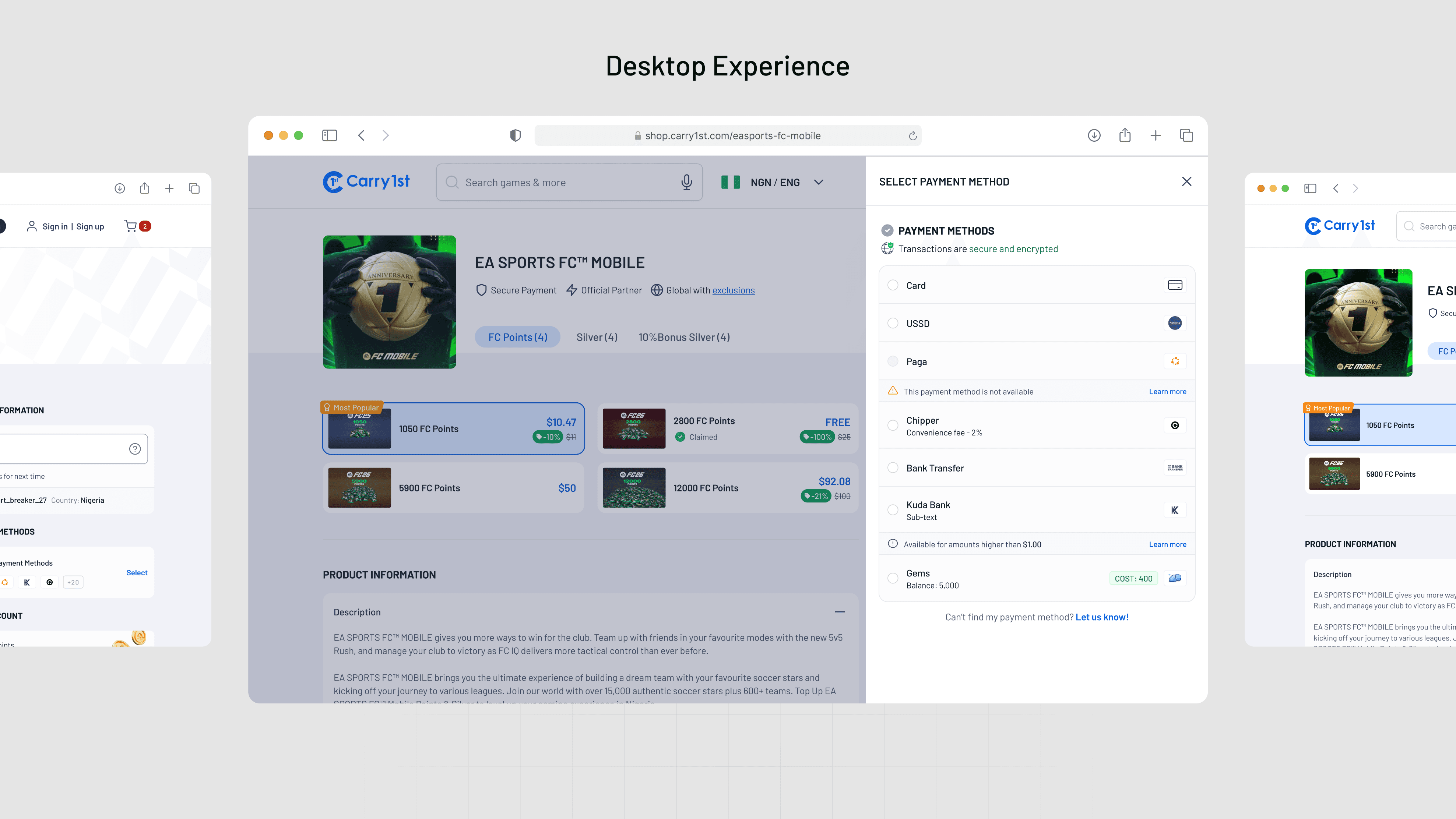
I began by redefining the product detail page’s structure and information architecture to reduce cognitive load, highlight the most important purchasing cues, and streamline the checkout process.
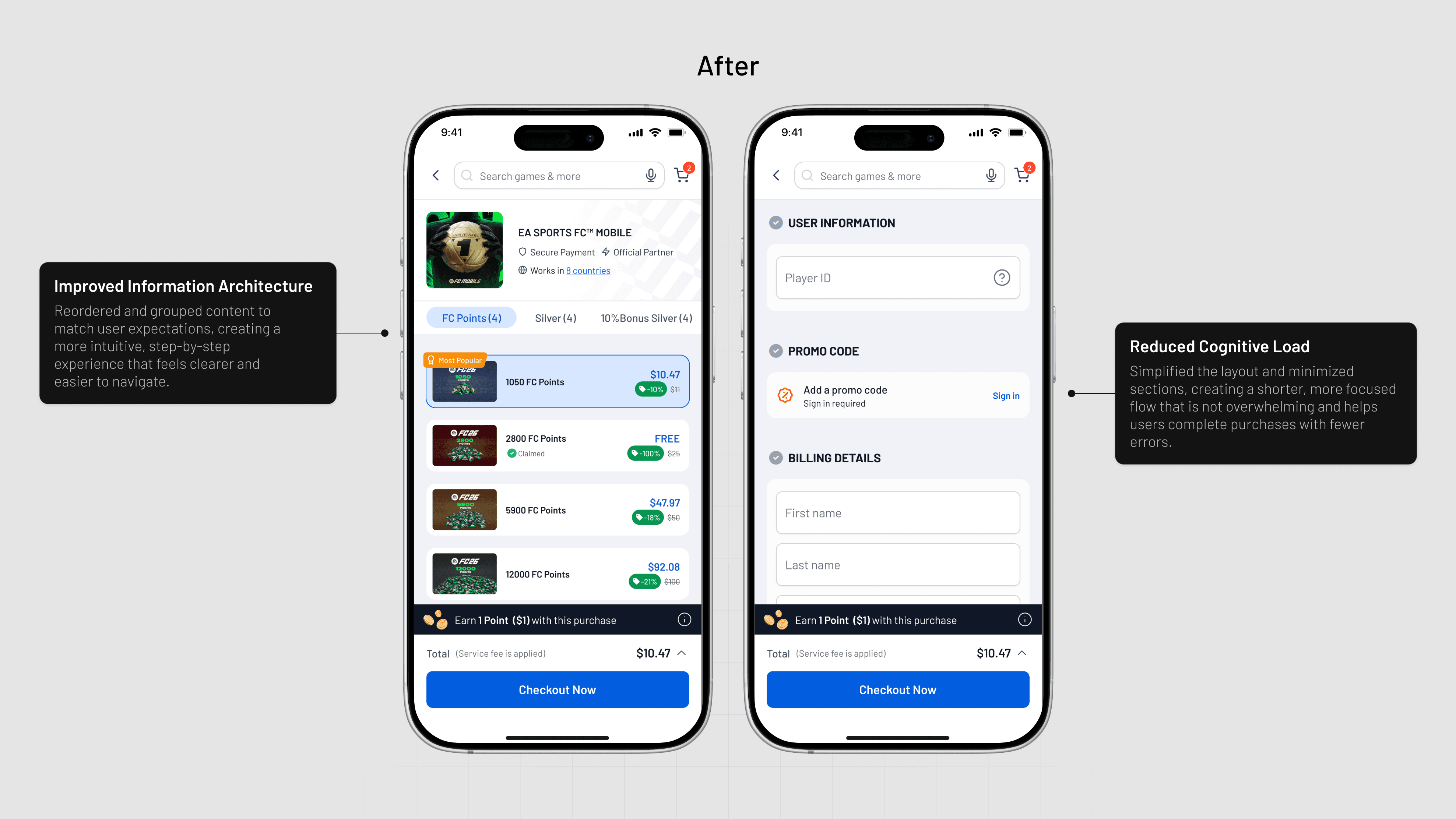
Progressive disclosure with intuitive flow
Next, I replaced the lengthy, hard-to-scan page with a structured, progressive flow supported by strong CTAs, helping users focus on the right actions at the right time.
Embedded payment forms
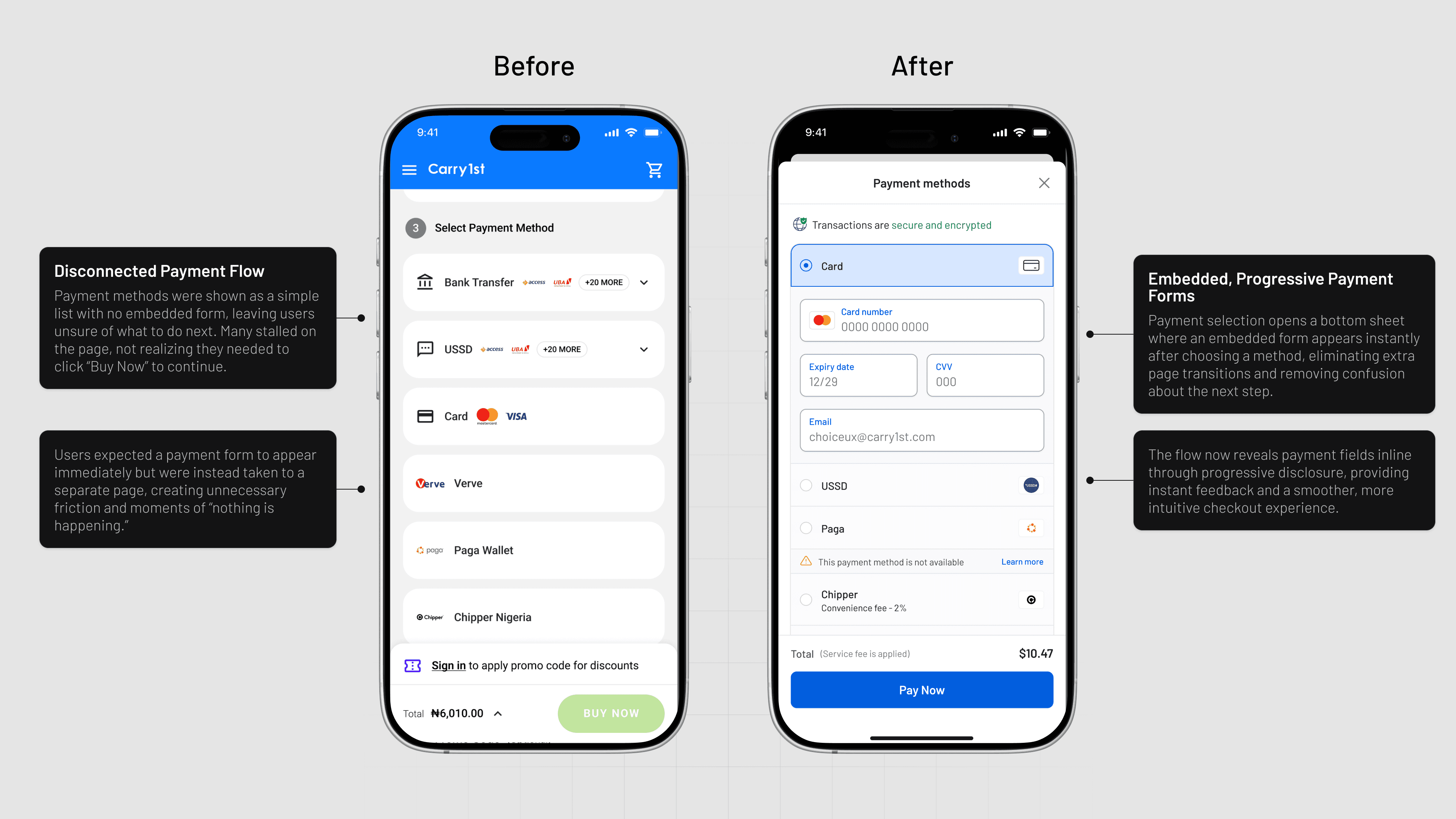
Previously, users selected a payment method but saw no form, leaving them stuck on the page and unsure how to proceed. The improved UI embeds the payment form directly after selection, guiding users seamlessly without extra clicks or navigation.
Design decision I
Simplifying the product and payment experience
I conducted usability research with 18 participants from Nigeria, Egypt, Kenya, and Morocco who had made zero or fewer than five purchases on the Carry1st Shop within the previous four months to uncover key pain points.
My first objective was to simplify the product and payment experience so users can complete purchases effortlessly, with fewer steps and less mental strain
Redefined structure and information architecture
I began by redefining the product detail page’s structure and information architecture to reduce cognitive load, highlight the most important purchasing cues, and streamline the checkout process.
Progressive disclosure with intuitive flow
Next, I replaced the lengthy, hard-to-scan page with a structured, progressive flow supported by strong CTAs, helping users focus on the right actions at the right time.
Embedded payment forms
Previously, users selected a payment method but saw no form, leaving them stuck on the page and unsure how to proceed. The improved UI embeds the payment form directly after selection, guiding users seamlessly without extra clicks or navigation.
Design decision II
Building trust with trust signals
My next objective was to incorporate strong trust signals and clear reassurances at the payment step to help new and returning users feel safe, informed, and confident enough to complete their purchase.
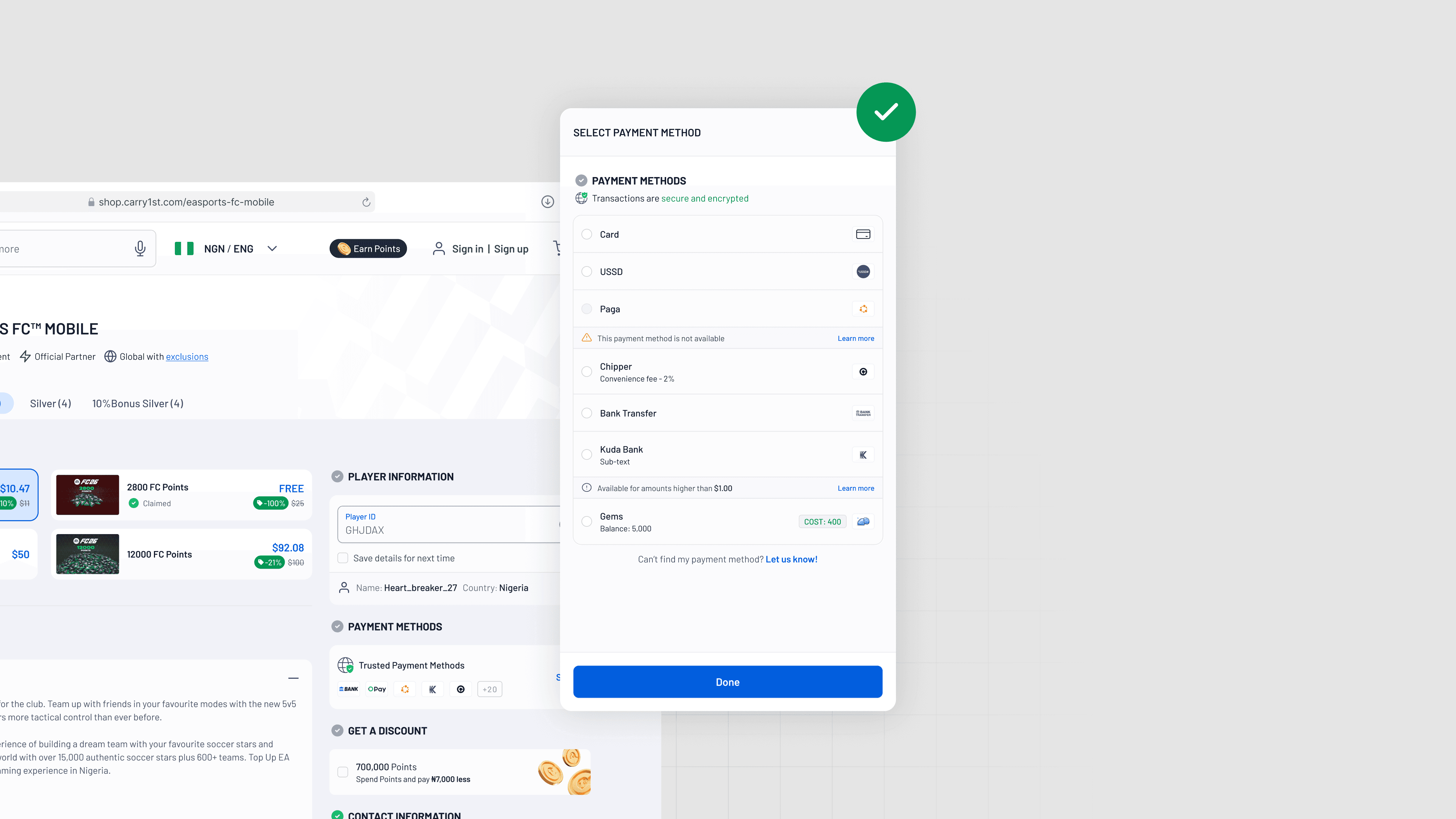
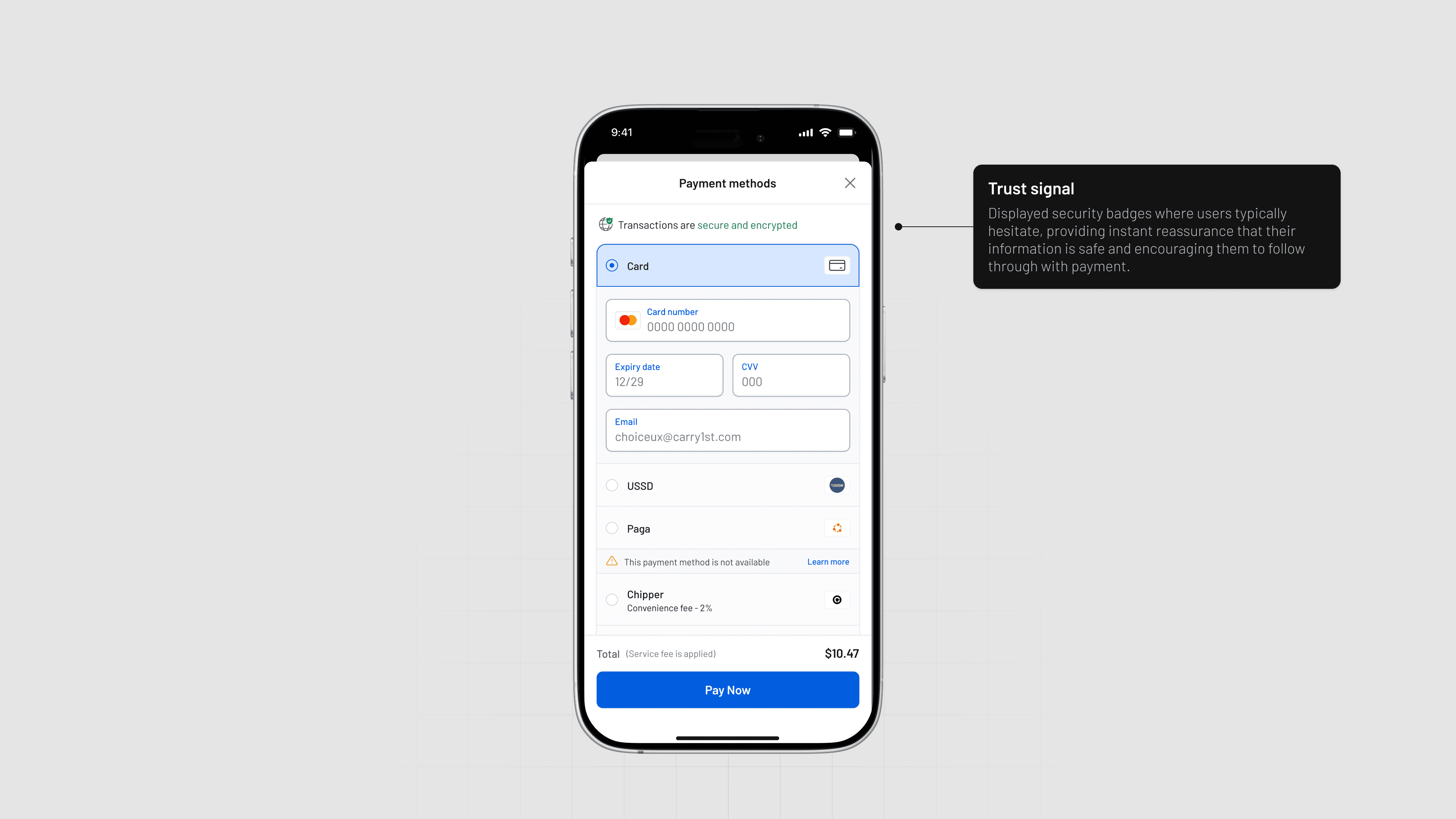
Well-placed security badges
Integrated well-positioned security indicators at key decision points to reduce anxiety, validate platform reliability, and support higher checkout conversion.
Clear Refund Policies
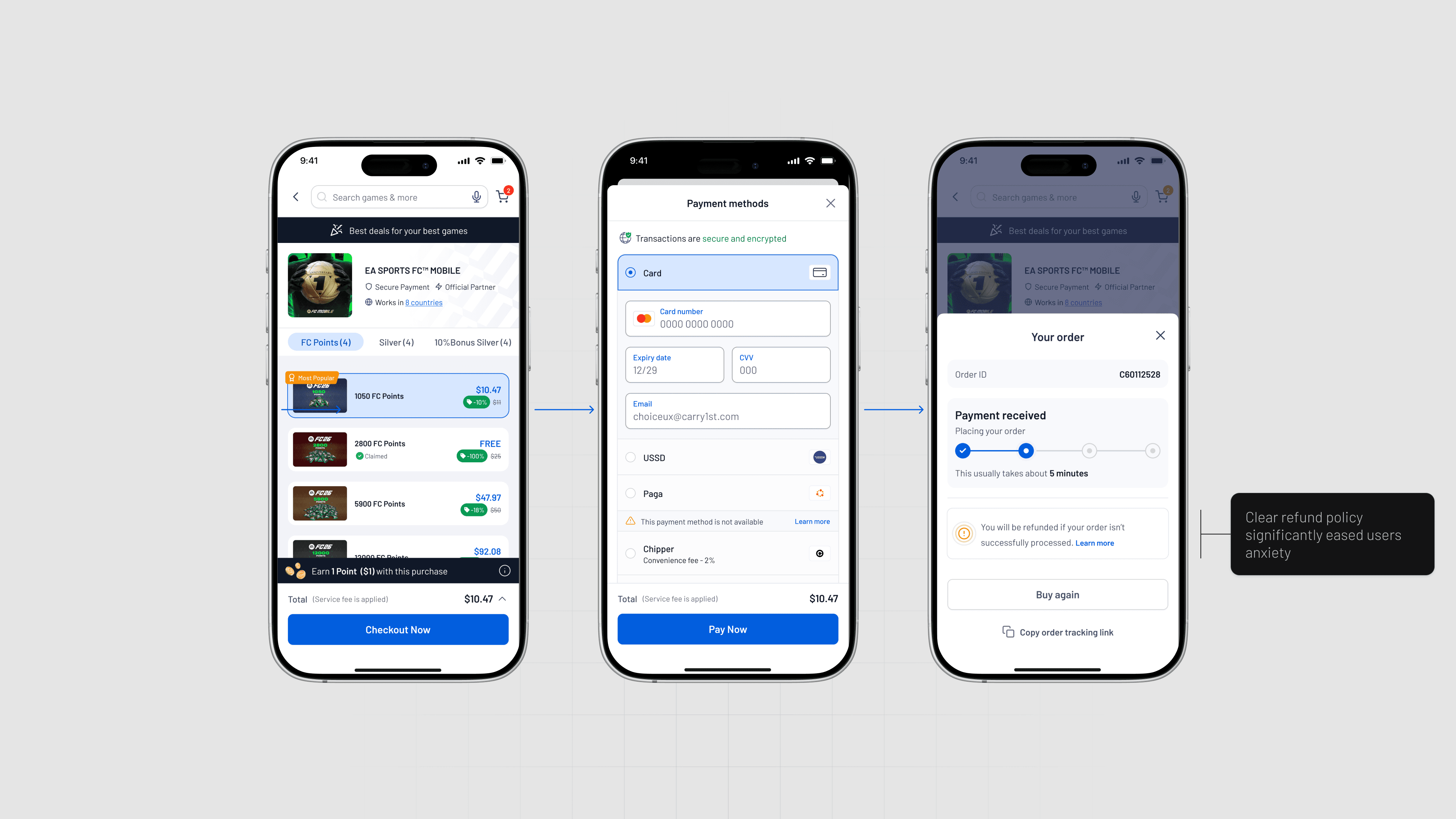
The experience also provides a transparent and easy-to-understand refund policy immediately after payment, reducing anxiety and helping users feel secure about resolving any issues.
Embedded payment forms
Previously, users selected a payment method but saw no form, leaving them stuck on the page and unsure how to proceed. The improved UI embeds the payment form directly after selection, guiding users seamlessly without extra clicks or navigation.
Design decision II
Building trust with trust signals
My next objective was to incorporate strong trust signals and clear reassurances at the payment step to help new and returning users feel safe, informed, and confident enough to complete their purchase.
Well-placed security badges
Integrated well-positioned security indicators at key decision points to reduce anxiety, validate platform reliability, and support higher checkout conversion.
Clear Refund Policies
The experience also provides a transparent and easy-to-understand refund policy immediately after payment, reducing anxiety and helping users feel secure about resolving any issues.
Embedded payment forms
Previously, users selected a payment method but saw no form, leaving them stuck on the page and unsure how to proceed. The improved UI embeds the payment form directly after selection, guiding users seamlessly without extra clicks or navigation.
Design decision III
Reducing frustration with better error handling
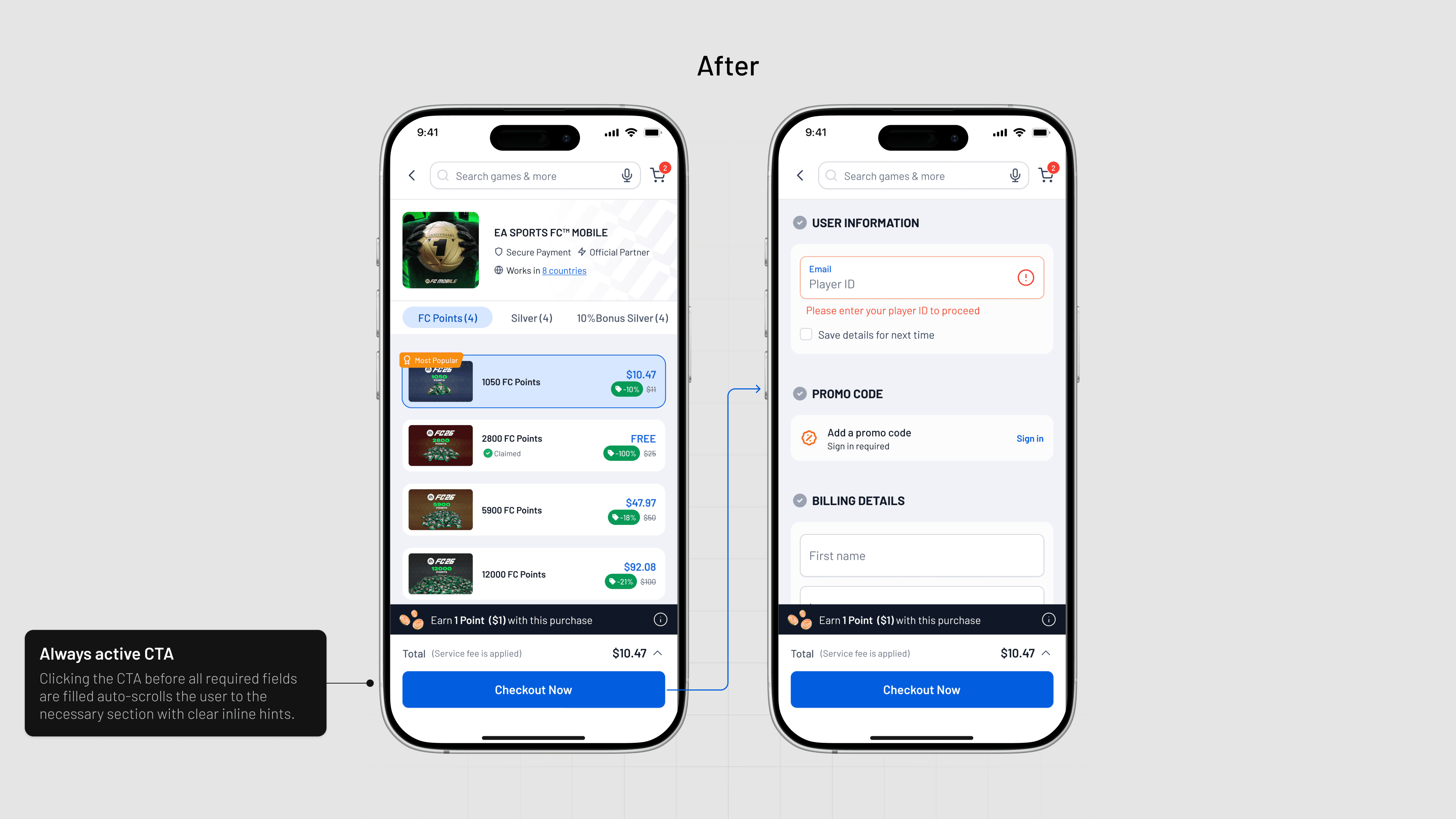
My final objective was to ensure the experience anticipates, prevents, and clearly communicates errors during checkout so users can recover instantly instead of abandoning their purchase.
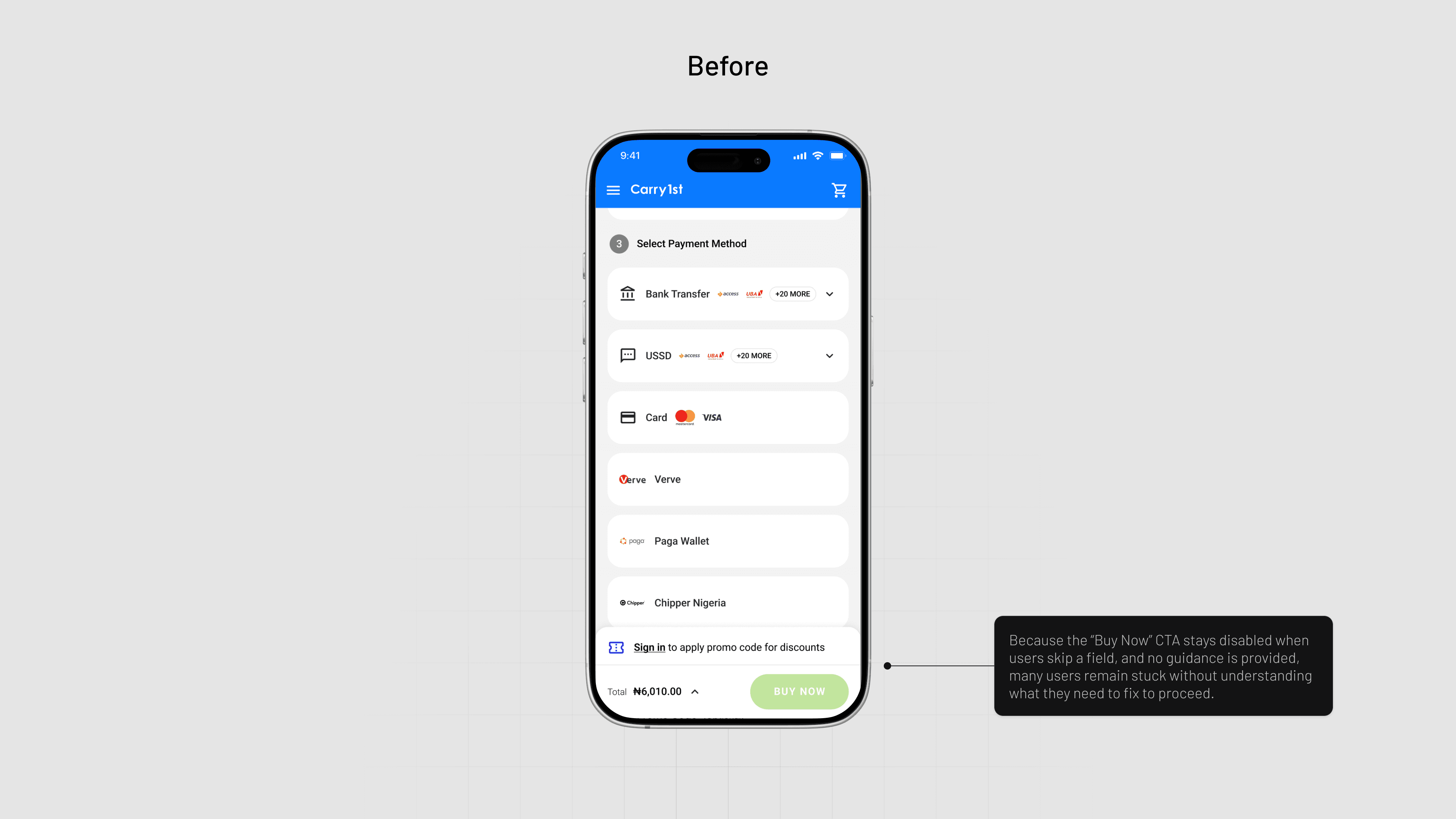
Always-active CTA
Keeping the “Checkout Now” button active and providing inline prompts or auto-scroll to any missing field to reduce confusion around form completion.
Design decision III
Reducing frustration with better error handling
My final objective was to ensure the experience anticipates, prevents, and clearly communicates errors during checkout so users can recover instantly instead of abandoning their purchase.
Always-active CTA
Keeping the “Checkout Now” button active and providing inline prompts or auto-scroll to any missing field to reduce confusion around form completion.
Retrospective
Impact on key metrics
From the outset, our UX strategy was to ensure we addressed the users' needs and positively impact the key business metrics.
The project required the collaboration of a cross-functional team. We gathered feedback as we tested iterations with users and conducted periodic grooming sessions with engineers to ensure clarity and timely release.
Impact
+0%
+0%
Reduction in average days to second purchase
+0%
+0%
Reduction in average time to complete task
+0%
+0%
Reduction in error during checkout
0.0
0.0
Positive System Usability Score
Retrospective
Impact on key metrics
From the outset, our UX strategy was to ensure we addressed the users' needs and positively impact the key business metrics.
The project required the collaboration of a cross-functional team. We gathered feedback as we tested iterations with users and conducted periodic grooming sessions with engineers to ensure clarity and timely release.
Impact
+0%
+0%
Reduction in average days to second purchase
+0%
+0%
Reduction in average time to complete task
+0%
+0%
Reduction in error during checkout
0.0
0.0
Positive System Usability Score
Helpful resources
Books
Design for How People Think

Generating Product Ideas
100 Things About People
Course
Psychological principles
01
Progressive Disclosure - Users are less overwhelmed if they're exposed to complex features later
Helpful resources
Books
Design for How People Think
Generating Product Ideas
100 Things About People
Course
Psychological principles
01
Progressive Disclosure - Users are less overwhelmed if they're exposed to complex features later