Carry1st ● 2025
Boosting conversion and retention with transparency and excellent recovery
Boosting conversion and retention with transparency and excellent recovery
Boosting conversion and retention with transparency and excellent recovery
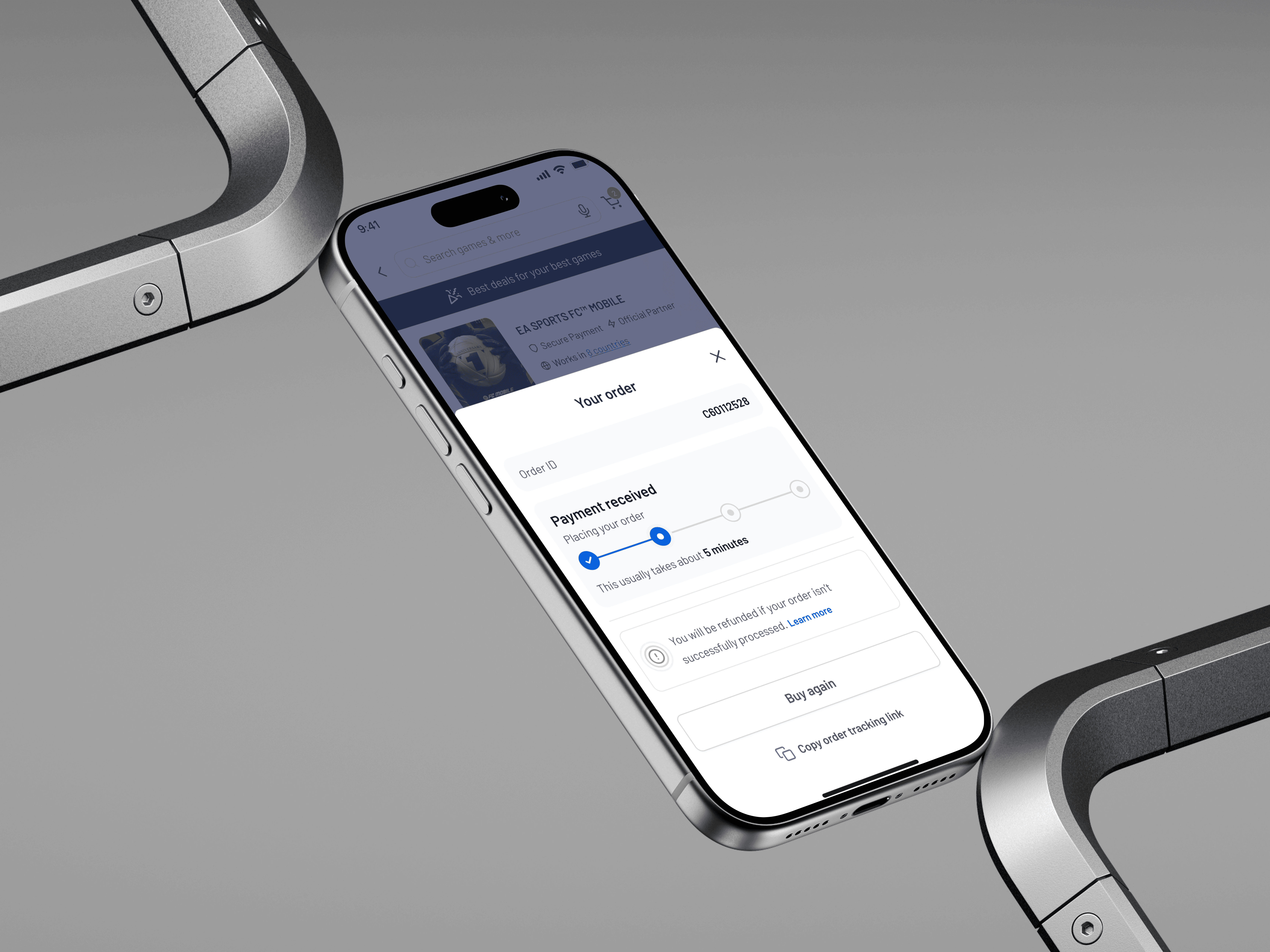
The Carry1st Shop is a digital marketplace where users across Africa buy game credits, data bundles, and digital services instantly and securely.
Role
Product Design Lead
Product Designer
Deliverables
User Research
Component Library
High Fidelity Designs
Team
2x Product Designers
1x Product Manager
4x Software Engineers
Platform
Web Responsive
Mobile Application
The Problem
10,000 failed orders caused refund overload, 45% churn.
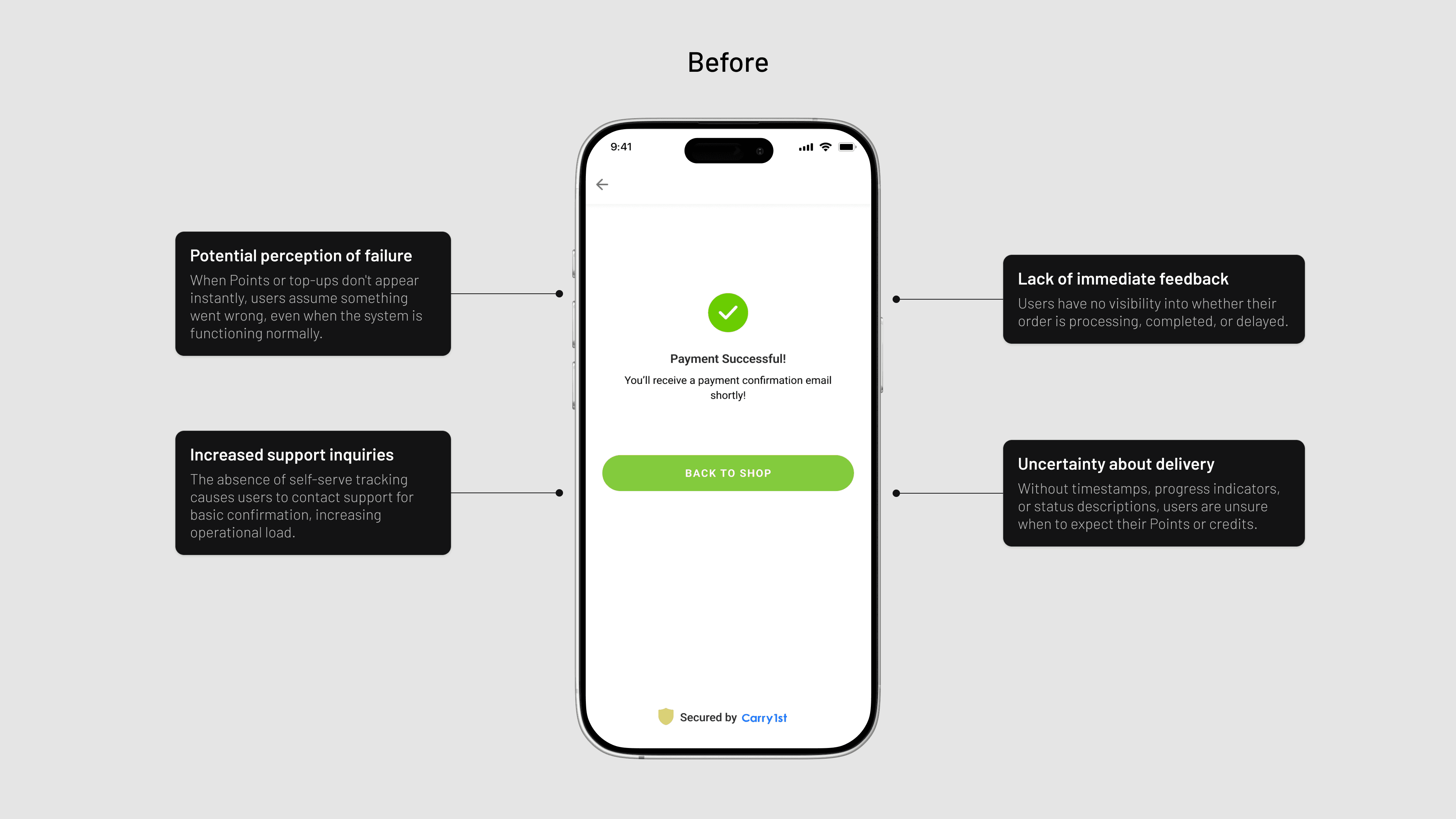
In the first 4 months of 2025, data showed 10,364 out of 1.26 million order fulfillments failed after customers had already paid — and the system took no action unless users contacted support.
Only 5,993 (57.8%) of customers reported the issue, meaning nearly half of affected users experienced a failed fulfillment with no guidance or resolution path. This gap created…
01
Over 50 daily manual refund requests which overwhelms the support team.
02
45% of customers who experience failed fulfillments churning.
03
User trust declining and platform conversion taking a hit after user reviews such as "Beware of Scams", "I got scammed, don't trust this app".
Product before redesign
Opportunity I
Improve transparency across the fulfillment journey, giving customers visibility into their order status — especially when something goes wrong.
Opportunity II
Build proactive, platform-led recovery systems that automatically detect failures and initiate the next steps before the customer ever needs to intervene.
The Problem
10,000 failed orders caused refund overload, 45% churn.
In the first 4 months of 2025, data showed 10,364 out of 1.26 million order fulfillments failed after customers had already paid — and the system took no action unless users contacted support.
Only 5,993 (57.8%) of customers reported the issue, meaning nearly half of affected users experienced a failed fulfillment with no guidance or resolution path. This gap created…
01
Over 50 daily manual refund requests which overwhelms the support team.
02
45% of customers who experience failed fulfillments churning.
03
User trust declining and platform conversion taking a hit after user reviews such as "Beware of Scams", "I got scammed, don't trust this app".
Product before redesign
Opportunity I
Improve transparency across the fulfillment journey, giving customers visibility into their order status — especially when something goes wrong.
Opportunity II
Build proactive, platform-led recovery systems that automatically detect failures and initiate the next steps before the customer ever needs to intervene.
Design goals
How might we
Give users clear, real-time visibility into the fulfillment process so they feel informed, reassured, and in control, even when issues occur?
Proactively trigger corrective actions when we detect failed transactions before users even notice a problem?
Reduce manual support workload by creating intuitive recovery flows that resolve fulfillment issues without requiring users to contact support?
Design goals
How might we
Give users clear, real-time visibility into the fulfillment process so they feel informed, reassured, and in control, even when issues occur?
Proactively trigger corrective actions when we detect failed transactions before users even notice a problem?
Reduce manual support workload by creating intuitive recovery flows that resolve fulfillment issues without requiring users to contact support?
Design decision I
Designing for real time visibility
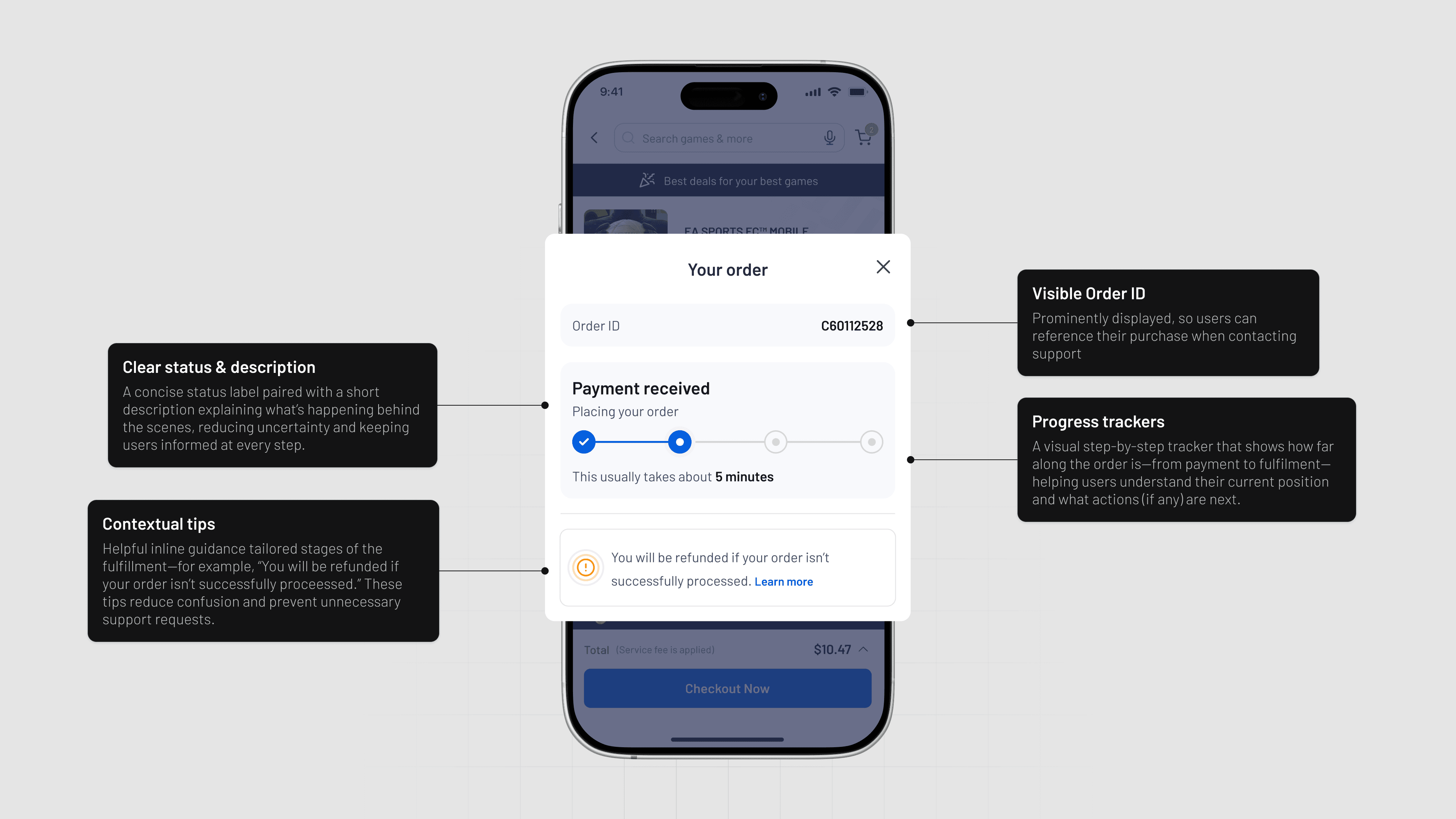
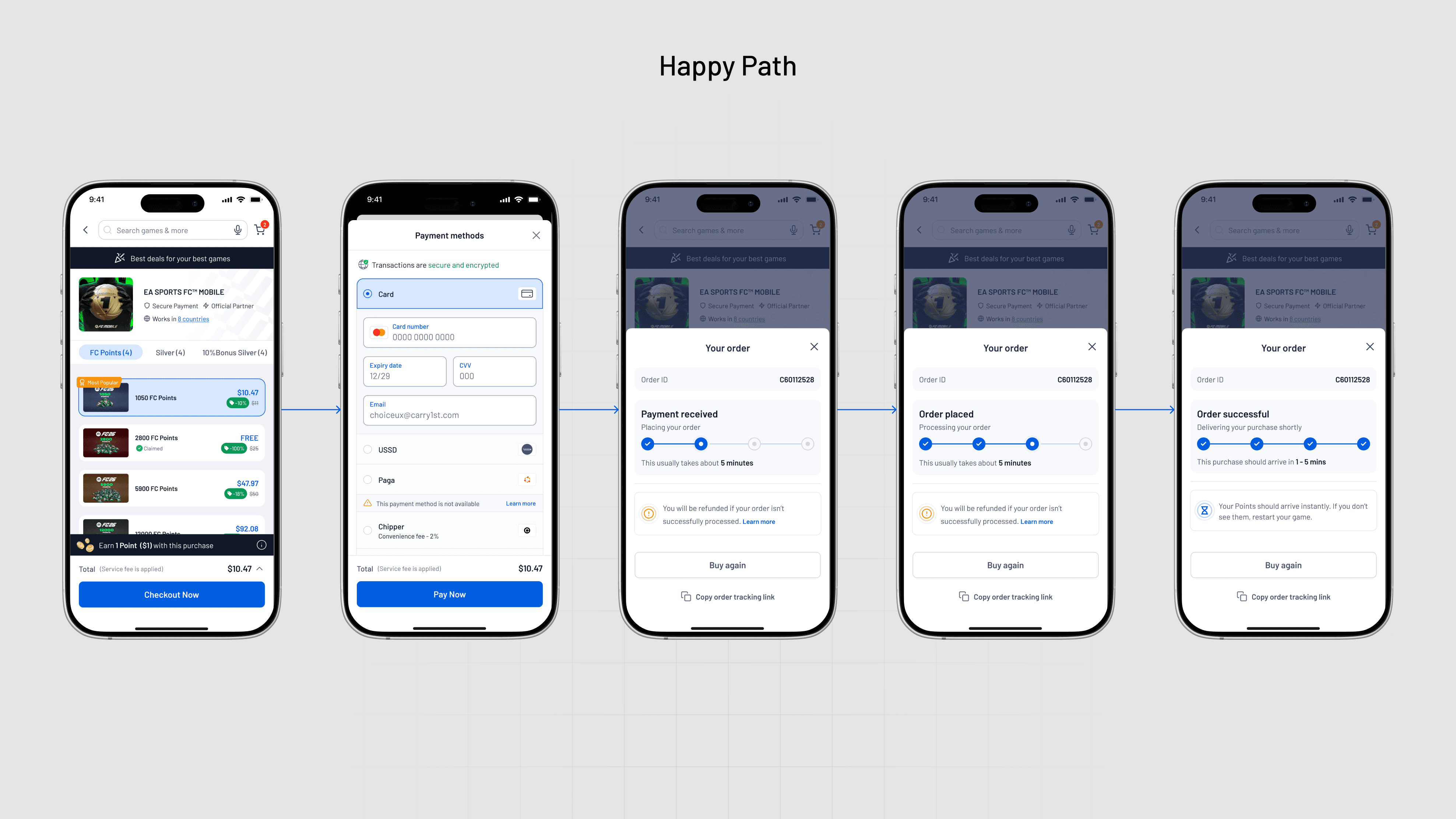
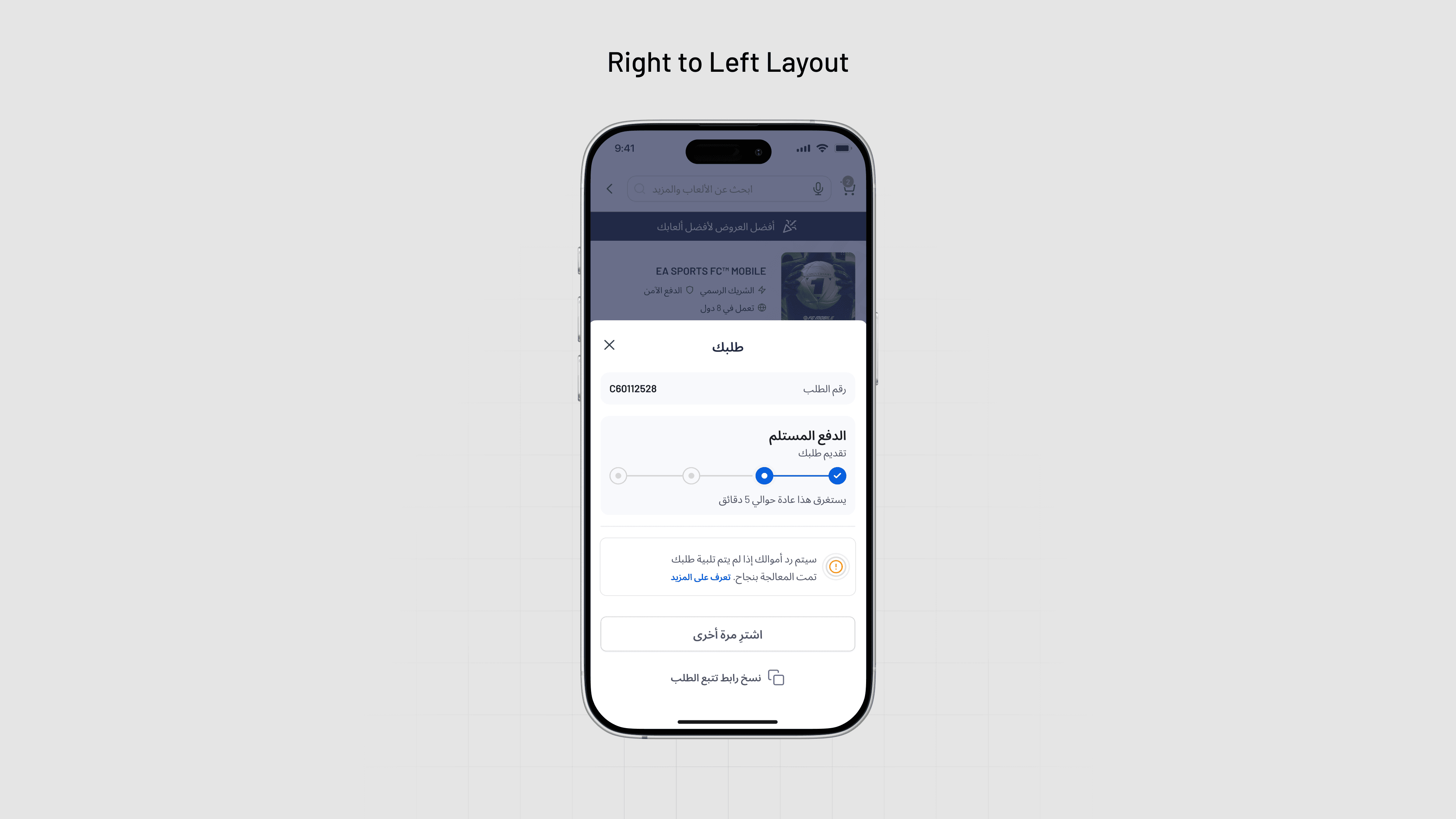
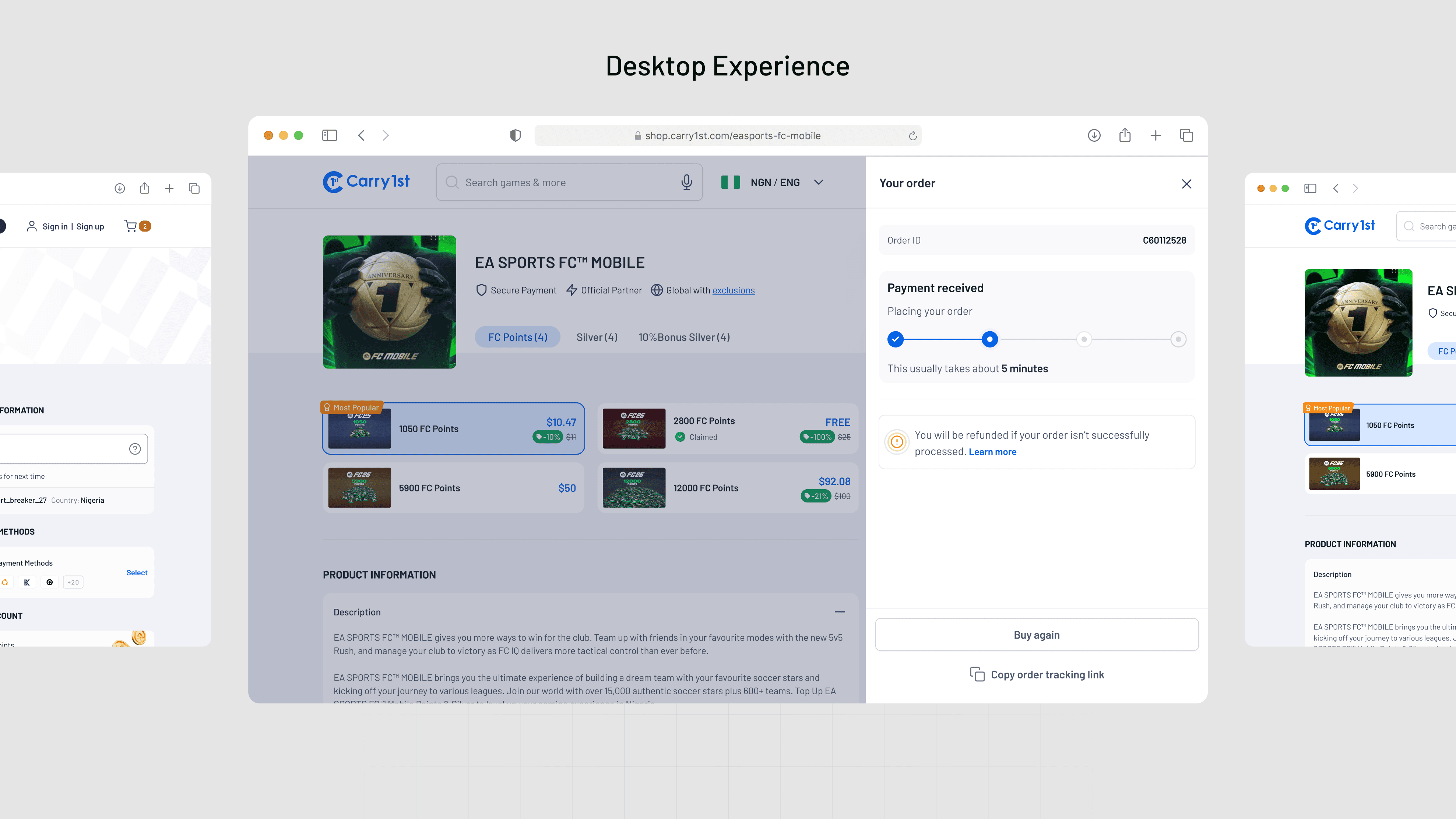
Early interviews and benchmarking showed that giving users clear, real-time visibility into the fulfillment process helped them feel informed, reassured, and in control—even when issues arose. This insight guided my focus toward redesigning and improving the end-to-end fulfillment tracking experience.
Design decision I
Designing for real time visibility
Early interviews and benchmarking showed that giving users clear, real-time visibility into the fulfillment process helped them feel informed, reassured, and in control—even when issues arose. This insight guided my focus toward redesigning and improving the end-to-end fulfillment tracking experience.
Design decision II
Designing for Proactive corrective actions when fulfillment fails
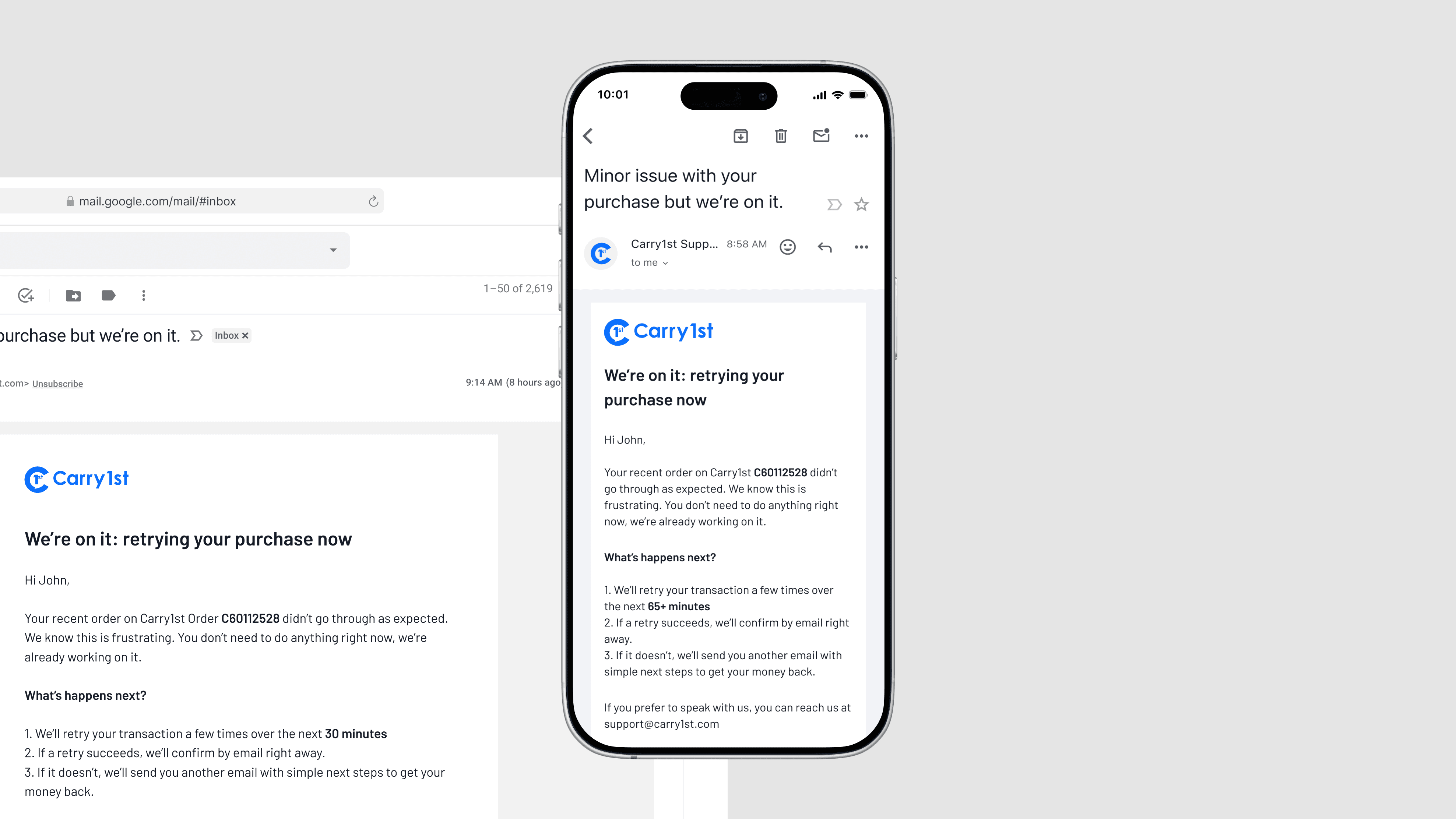
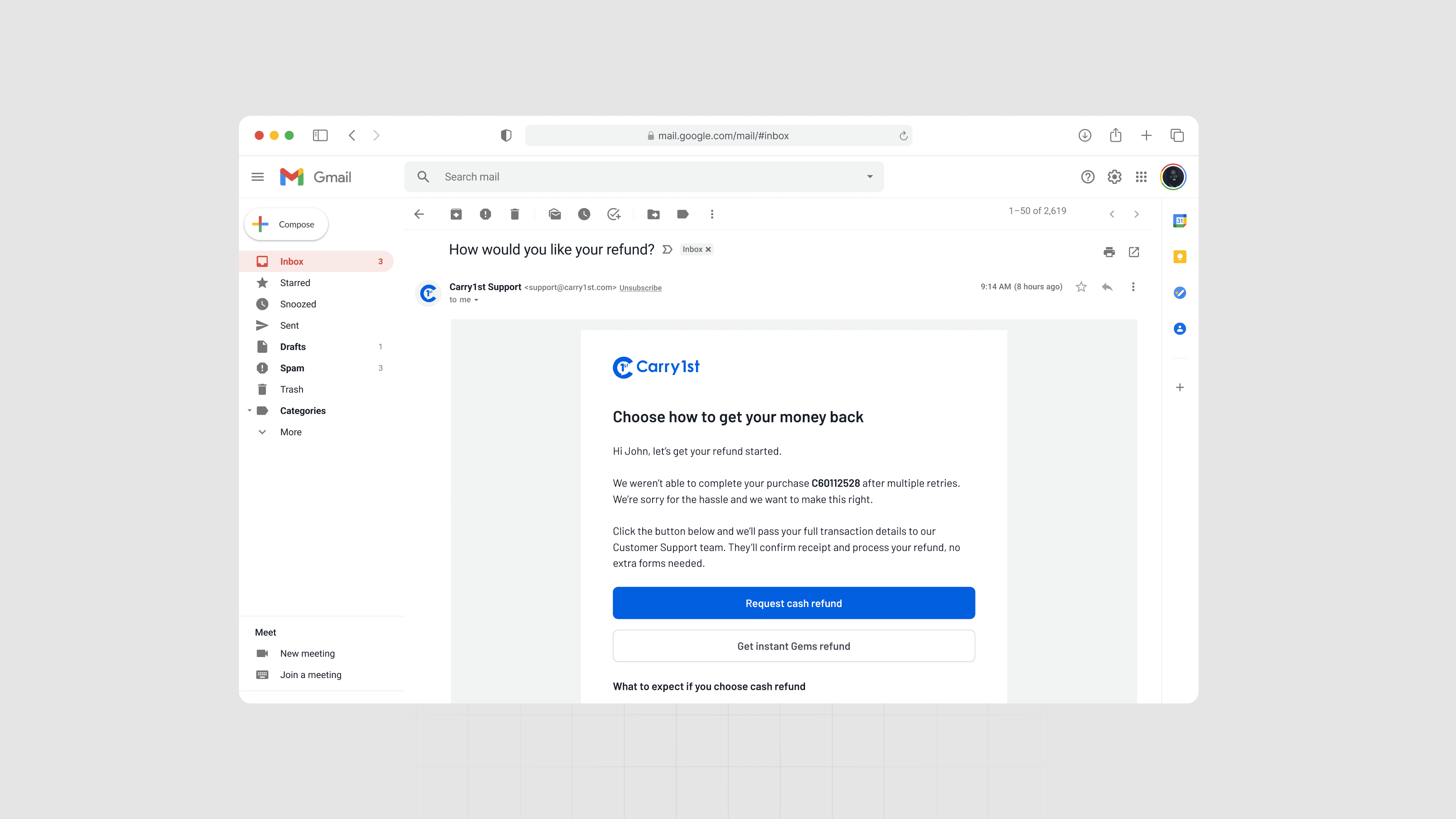
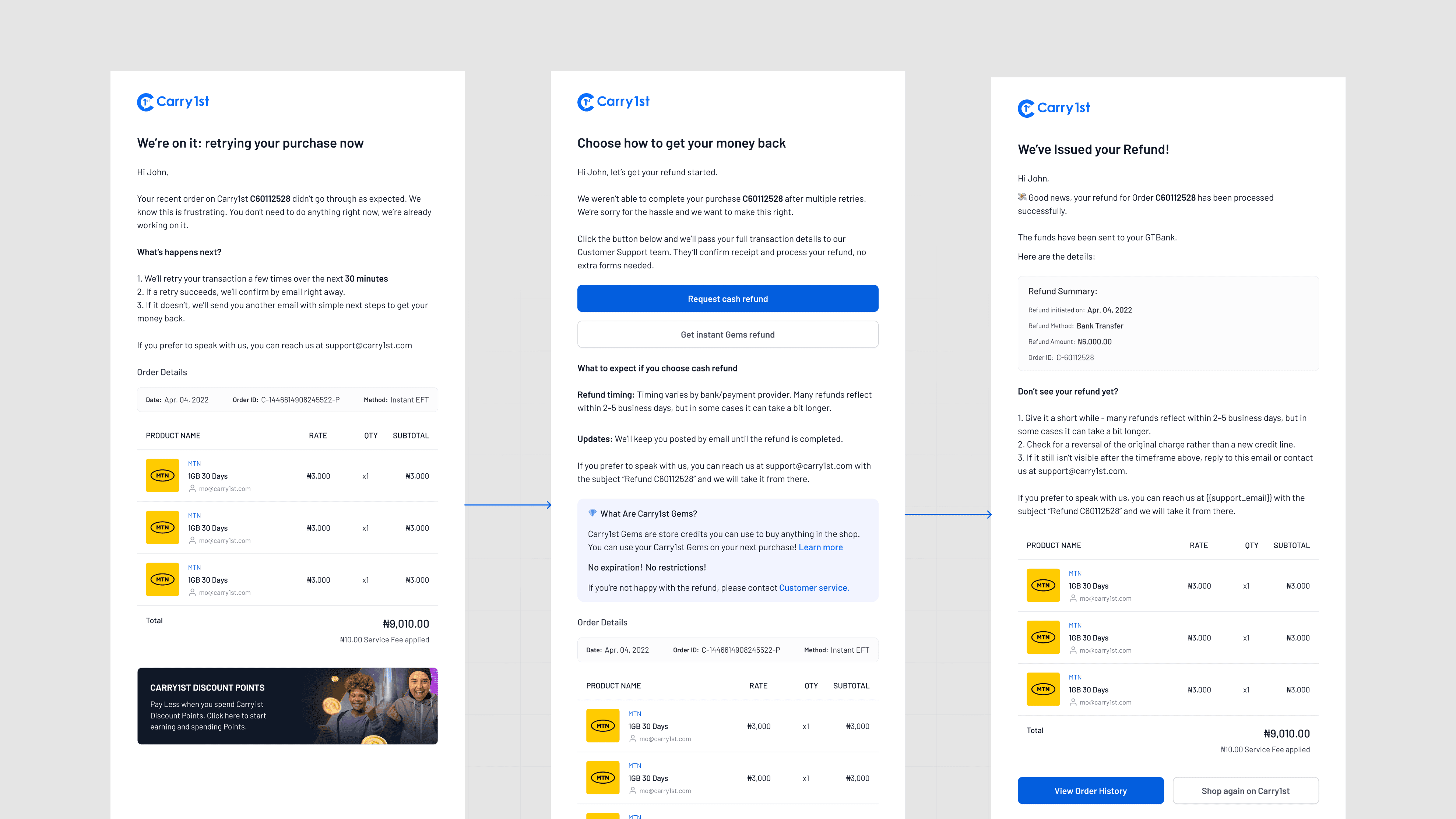
I explored designing an experience that automatically initiates corrective actions the moment a failed transaction is detected—resolving issues before users even realize something went wrong.
With automated emails and push notifications, the recovery experience became proactive, reduced support volume, and created a more reliable post-payment experience.
Design decision II
Designing for Proactive corrective actions when fulfillment fails
I explored designing an experience that automatically initiates corrective actions the moment a failed transaction is detected—resolving issues before users even realize something went wrong.
With automated emails and push notifications, the recovery experience became proactive, reduced support volume, and created a more reliable post-payment experience.
Retrospective
Estimated impact on key metrics
From the outset, our UX strategy was to ensure we addressed the users' needs and positively impact the key business metrics.
The project required the collaboration of a cross-functional team. We gathered feedback as we tested iterations with users and conducted periodic grooming sessions with engineers to ensure clarity and timely release.
Impact
+0%
+0%
Decline in support tickets volume
+0%
+0%
Decline in month 1 Churn rate
+0%
+0%
Uplift in month 1 retention rate
Retrospective
Estimated impact on key metrics
From the outset, our UX strategy was to ensure we addressed the users' needs and positively impact the key business metrics.
The project required the collaboration of a cross-functional team. We gathered feedback as we tested iterations with users and conducted periodic grooming sessions with engineers to ensure clarity and timely release.
Impact
+0%
+0%
Decline in support tickets volume
+0%
+0%
Decline in month 1 Churn rate
+0%
+0%
Uplift in month 1 retention rate
Helpful resources
Books
Design for How People Think

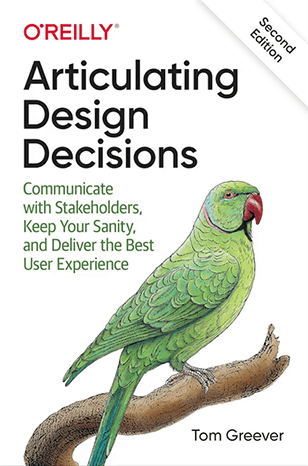
Articulating Design Decisions
UX Strategy

Articles
Psychological principles
01
Anchoring Bias - Users rely heavily on the first piece of information they see
02
Framing - The way information is presented affects how users make decisions
Helpful resources
Books
Design for How People Think
Articulating Design Decisions
UX Strategy
Articles
Psychological principles
01
Anchoring Bias - Users rely heavily on the first piece of information they see
02
Framing - The way information is presented affects how users make decisions